
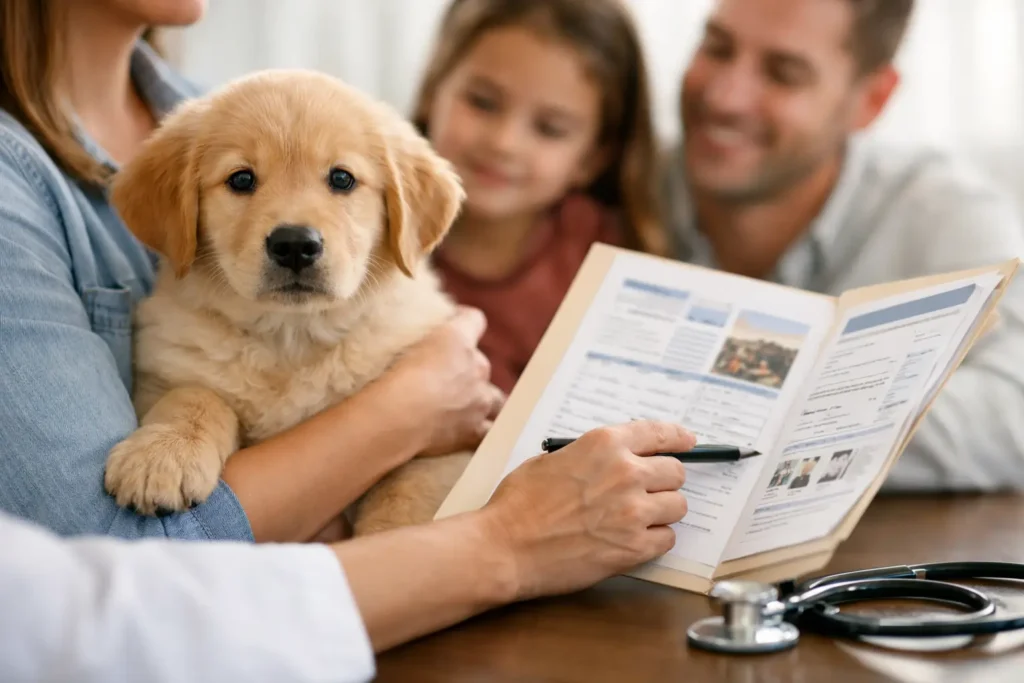
A puppy can look bright-eyed, playful, and perfect during a first visit. That is a lovely start, but it is not the full picture. Understanding why puppy health records matter helps your family choose with confidence, prepare for the first vet visit, and give your new companion the care they need from day one.
For first-time owners especially, paperwork can feel less exciting than choosing a breed, a name, or a new bed. Yet a clear health record is one of the strongest signs that a puppy has received proper attention before coming home. It turns reassuring words into information you can check, keep, and share with your own veterinarian.
Why Puppy Health Records Matter Before You Buy
A puppy’s early weeks are a sensitive period. Their immune system is still developing, and they need timely veterinary care, vaccinations, parasite prevention, appropriate nutrition, and close observation. Health records create a timeline of that care.
When a seller can explain and document what has been done, you are not left guessing whether the puppy has had a veterinary examination or when the next vaccine is due. This matters because missed or delayed care can put a young puppy at greater risk of preventable illness.
Records also help you compare puppies fairly. Price, coat color, and breed popularity may catch your attention first, but responsible early care has real value. A puppy with transparent documentation may not always be the lowest-priced option, but it gives a family clearer information on the care already provided and the care still required.
What a Puppy Health Record Should Show
Health paperwork does not need to be complicated, but it should be clear enough for a new owner and veterinarian to follow. The exact documents can vary based on the puppy’s age, breed, and veterinary plan. A good record commonly includes the puppy’s identifying details, such as breed, date of birth, sex, and color, along with relevant care dates.
Vaccination Details
Vaccination records should show which vaccines were given and when. Puppies usually need a series of vaccinations rather than a single shot, so the record helps you understand what has been completed and what your veterinarian may recommend next.
Do not assume a puppy is fully protected simply because it has received one vaccination. The right schedule depends on age, local veterinary advice, and the puppy’s individual circumstances. Bring the record to your first vet appointment so the clinic can continue the plan appropriately instead of starting over or accidentally repeating a dose too soon.
Deworming and Parasite Care
Puppies can be exposed to internal parasites early in life, even when they appear energetic and healthy. Deworming details tell you what treatment was provided and on what date. Your veterinarian can then advise whether another dose, a fecal check, or ongoing parasite prevention is needed.
This information matters for the whole household. Young children, older adults, and other pets all benefit when a new puppy’s parasite care is handled responsibly and followed up properly.
Veterinary Health Check Notes
A veterinary health check record provides more than a quick statement that a puppy is “healthy.” It may confirm that a veterinarian has examined the puppy and may include observations about general condition, weight, eyes, ears, skin, teeth, heart, movement, and other basic findings.
No health check can promise that a dog will never become sick. Puppies, like people, can develop conditions later that were not visible at an early examination. Still, a documented check shows that the puppy’s health was assessed rather than assumed.
Treatments, Medications, and Special Notes
If a puppy has received medication, supplements, or treatment for a minor issue, that should be communicated honestly. Small concerns are not automatically a reason to reject a puppy. Many are temporary and manageable. What matters is knowing the facts, understanding any follow-up needed, and having the information your veterinarian needs to make a sound recommendation.
Transparency is especially valuable with breeds that may have particular grooming, skin, breathing, joint, or dietary considerations. A responsible conversation is better than a vague promise.
Records Make the First Weeks at Home Easier
The first few days after bringing home a puppy are busy. Your family is helping them settle in, managing toilet training, choosing food, setting up a safe sleeping space, and learning their personality. Health records remove one major uncertainty from that adjustment.
They allow you to schedule the next veterinary visit at the right time. They also help your vet understand whether a change in appetite, stool, energy, or behavior might be connected to a recent vaccine, medication, diet change, or the stress of moving to a new home.
Keep a copy of every record in one folder, whether printed or digital. Add future vaccination certificates, receipts, prescriptions, grooming notes, and any test results. Over time, this becomes your dog’s health history. It can be useful when you move, switch clinics, travel, arrange boarding, or need to make a quick decision in an emergency.
How to Review Records Without Feeling Overwhelmed
You do not need veterinary training to ask sensible questions. Start by checking whether the puppy’s identifying details match the puppy you are meeting. Then look at the dates. Are the vaccination and deworming entries understandable? Is there a clear explanation of what care has already been completed and what should happen next?
Ask who performed the health check and when it was done. Ask what food the puppy is currently eating, whether there have been any recent changes in stool or appetite, and whether there are any follow-up instructions. A trustworthy seller should welcome practical questions because healthy placement is good for the puppy and the family.
Be cautious if records are missing, dates are unclear, or you are pressured to make a fast decision without time to review the information. A seller may not have every future answer, and no one can guarantee a completely problem-free life for a living animal. But they should be open about the care a puppy has received and willing to provide documentation.
Health Records Support Responsible Puppy Ownership
Choosing a puppy is an emotional decision, but it is also a long-term commitment. A small dog may be with you for many years, while larger breeds often have different space, exercise, and care needs. Health records are one practical part of choosing a puppy that suits your family and beginning their care responsibly.
They also create continuity between the puppy’s early care and your role as the new owner. Once your puppy comes home, the record is no longer just paperwork from a pet shop or breeder. It becomes the starting point for your own decisions about preventive care, nutrition, training, insurance, boarding, and routine veterinary visits.
At Pet Time, families can ask about a puppy’s health documentation, vaccination status, and care needs before making a decision. That conversation should feel calm and clear, whether you visit the Puchong showroom or are arranging delivery within West Malaysia. The goal is not to rush you into a choice. It is to help you bring home a puppy with the information needed to care for them well.
A Healthy Start Is Built on Clear Information
The best time to ask for health records is before you bring a puppy home, when you can review the details, raise questions, and plan the next vet visit without pressure. Then keep those records close, listen to your veterinarian, and give your puppy time to settle into the family. A little clarity at the beginning can support many happy, well-cared-for years together.