
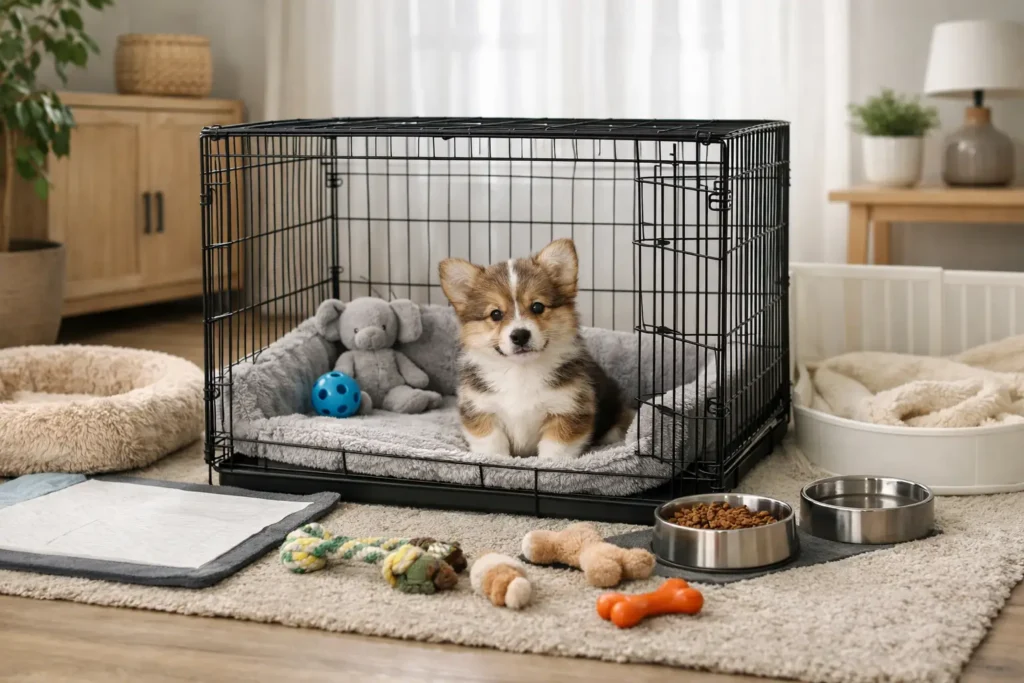
A puppy’s first night at home can be exciting, noisy, and a little confusing for everyone. The best puppy cage setup gives your new companion a secure place to rest while helping your family start a gentle routine from day one. It is not about shutting a puppy away. It is about creating a small, comfortable space that feels predictable, safe, and truly theirs.
For first-time owners, a cage or crate can also make house training, bedtime, and quiet time much easier. The key is choosing the right size, placing it thoughtfully, and filling it with only the essentials.
Choose the Right Cage Size First
A cage should be large enough for your puppy to stand up without crouching, turn around easily, and lie down in a natural position. It should not be so large that your puppy can sleep at one end and use the other end as a toilet area. That extra space can slow down early potty training.
When buying for a small breed puppy, such as a Pomeranian, Maltese, Chihuahua, or Toy Poodle, it is tempting to choose the smallest cage available. However, puppies grow quickly, and comfort still matters. A cage with a divider panel is often the most practical choice because you can expand the sleeping area as your puppy grows.
Larger breeds, including Corgis, Golden Retrievers, and Beagles, will need more room as adults. If you are bringing home a larger puppy, ask about the breed’s expected adult size before purchasing a cage. Planning ahead can save you from replacing supplies too soon.
Where to Put Your Puppy’s Cage
Location matters as much as cage size. Your puppy wants to feel close to the family, especially during the first few weeks. Place the cage in a calm part of the living area where your puppy can see and hear normal household activity without being surrounded by constant noise.
Avoid placing the cage near a hot window, air-conditioning vent, kitchen stove, or loud television. Puppies are sensitive to temperature and sudden sounds. A quiet corner of the living room is usually a good daytime spot.
At night, many new owners place the cage beside their bed for the first few days. This can help a young puppy settle because they can hear and smell their new family nearby. It also makes nighttime potty trips easier to notice. Once your puppy is sleeping more confidently, you can gradually move the cage to its long-term location if needed.
What to Put Inside the Cage
A good setup is simple. Too many items can make a small cage crowded, unsafe, or difficult to clean. Start with clean, puppy-safe basics and adjust based on your puppy’s behavior.
The best puppy cage setup usually includes:
- A washable crate mat or thin, soft bed that fits flat inside the cage
- A spill-resistant water bowl attached securely to the side of the cage
- One or two safe chew toys designed for puppies
- A light blanket over part of the cage if it helps your puppy relax
Choose bedding that is easy to wash and does not have loose stuffing, long threads, or small parts that can be chewed and swallowed. Some puppies will chew a new bed at first, while others may have accidents during early house training. A simple washable mat is often a better starting point than an expensive plush bed.
Water should be available whenever your puppy is spending more than a short period in the cage, especially during the day. For bedtime, follow a routine that matches your puppy’s age, health needs, and veterinarian’s advice. Very young puppies may still need regular overnight toilet breaks.
Chew toys are helpful because teething puppies naturally want to bite and explore. Select sturdy toys made for their size. Avoid leaving rawhide, small balls, soft toys with squeakers, or anything that can break into pieces unsupervised in the cage.
Should You Use Puppy Pads in the Cage?
In most cases, do not place puppy pads inside the sleeping section of the cage. Puppies naturally prefer not to soil the area where they rest, and a pad can send mixed signals during house training.
If you need an indoor toilet option because you live in an apartment, work long hours, or have limited outdoor access, create a separate puppy area instead. A playpen connected to or placed beside the cage can work well. Keep the sleeping cage on one side and a puppy pad or toilet tray on the other side, with a clear gap between them.
This arrangement gives your puppy a dedicated sleeping space and a separate bathroom area. It is especially helpful for families in condos or busy urban areas, but it still requires regular cleaning and a consistent training routine.
Create a Calm First-Night Routine
A cage works best when your puppy learns that it is a positive place, never a punishment. On the first day, leave the door open and let your puppy explore it voluntarily. Place a toy inside, offer a small treat, or feed a meal near the entrance if your puppy seems unsure.
For bedtime, take your puppy out for a toilet break, then guide them calmly into the cage. Keep your voice quiet and avoid turning bedtime into playtime. Some whining is normal in the first few nights because your puppy has left their mother, littermates, and familiar surroundings.
Do not immediately open the door every time your puppy makes a sound, or they may learn that crying brings attention. However, do not ignore a young puppy for hours either. If it has been a while since their last toilet break, take them out quietly, give them a chance to go, and return them to the cage without games or excitement.
Consistency is more reassuring than perfection. A regular rhythm of meals, play, toilet breaks, naps, and bedtime will help your puppy settle faster.
Keep the Cage Clean and Comfortable
Puppies can have accidents, shed fur, carry in dirt, and chew bedding. Clean the cage tray and bedding regularly with pet-safe cleaning products. Dry everything completely before placing it back inside. A damp mat can make a puppy uncomfortable and may create unwanted odors.
Check the cage daily for sharp edges, bent wires, damaged clips, or broken toys. If you use a wire cage, make sure the floor is fully covered by a proper mat so your puppy is not resting directly on the wire base.
Temperature is another practical concern. Puppies should not be left in a warm, stuffy room or directly under cold airflow. If your puppy is panting, shivering, or constantly moving around instead of resting, check the room temperature and their bedding.
Common Cage Setup Mistakes to Avoid
The biggest mistake is treating the cage as a place to put a puppy whenever they are energetic or inconvenient. Puppies need social time, gentle training, play, exercise suited to their age, and regular toilet breaks. A cage supports a routine, but it cannot replace attention and care.
Another common problem is using an oversized cage without a divider. Your puppy may choose one corner as a bathroom, which can make house training more difficult. On the other hand, a cage that is too small can cause stress and prevent your puppy from resting comfortably.
Avoid making the cage exciting one moment and frightening the next. Do not use it for punishment after accidents or chewing. If your puppy has an accident, clean it calmly and think about what needs adjusting: more frequent potty trips, a smaller sleeping space, or closer supervision.
Make the Setup Work for Your Family
Every puppy is different. A confident French Bulldog puppy may settle quickly with a chew toy and soft mat, while a sensitive Shih Tzu or Maltipoo puppy may need more gradual reassurance. Age, breed, home layout, and your daily schedule all affect the right arrangement.
If you are preparing for a new puppy, having the cage, bedding, food bowls, toys, and cleaning supplies ready before arrival can make the transition much less stressful. At Pet Time, new owners can also get practical guidance on choosing supplies that suit their puppy’s size and early care needs.
Your puppy does not need a perfect-looking cage. They need a clean, safe place, a patient family, and a routine they can learn to trust. When those pieces are in place, the cage becomes a comforting little home within your home.