
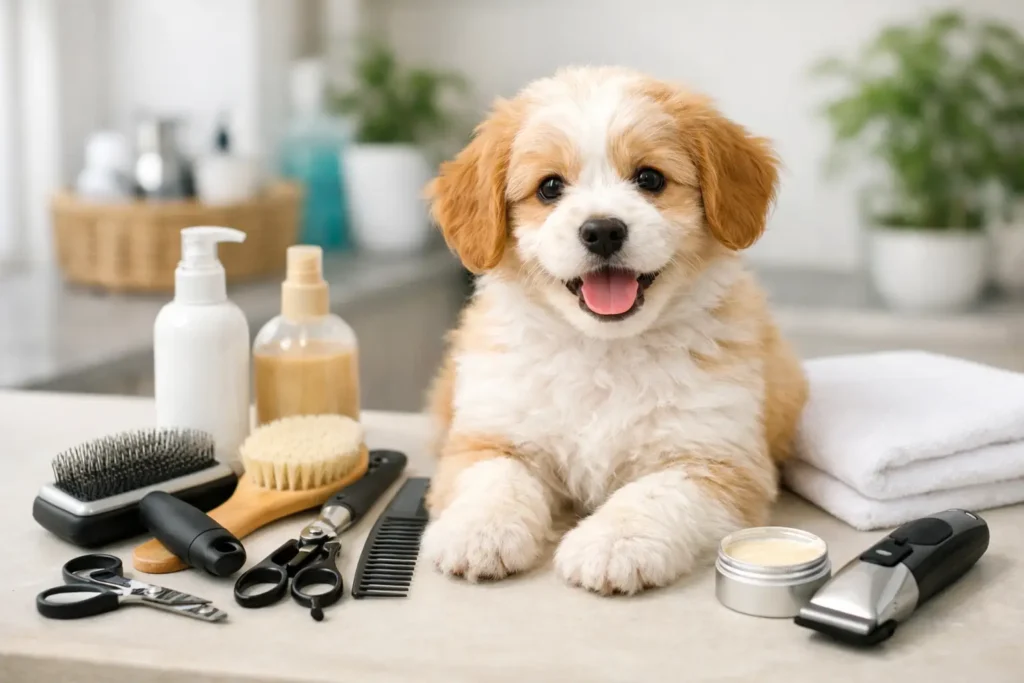
A puppy’s first brush, bath, and nail trim can shape how they feel about grooming for years. The best puppy grooming kit is not the one with the most tools. It is a small, gentle set of essentials that helps your new family member feel safe while keeping their coat, skin, ears, and paws clean.
For first-time owners, the goal is simple: start early, keep each session short, and use the right tool for your puppy’s coat. A calm five-minute routine at home is far more valuable than waiting until mats, long nails, or tangled fur turn grooming into a stressful event.
What Makes the Best Puppy Grooming Kit?
A good puppy grooming kit should match your dog’s age, coat type, and comfort level. Puppies have delicate skin, small nails, and very little patience for long grooming sessions. Tools made for adult dogs can be too harsh, especially if they pull the coat or create too much noise.
Look for comfortable handles, rounded edges, soft bristles, and tools that are easy to clean. Avoid buying a large kit just because it looks complete. Some sets include scissors, stripping blades, or heavy-duty combs that most new puppy owners will not need right away.
The best starter kit usually includes a gentle brush, a metal comb, puppy shampoo, nail clippers or a nail grinder, ear-cleaning supplies, and a soft towel. Add a toothbrush when your puppy is settled into their new routine. These basics cover the grooming needs most companion breeds have at home.
A gentle brush for everyday bonding
A soft slicker brush or pin brush is useful for many fluffy and medium-coated puppies. Breeds such as Poodle, Maltipoo, Shih Tzu, Pomeranian, and Maltese often need frequent brushing because loose hair and small tangles can quickly become mats.
For a short-coated puppy, including a Beagle, French Bulldog, or Chihuahua, a soft rubber curry brush or grooming mitt may be a better choice. It removes loose fur without scratching the skin. The right brush should glide through the coat with light pressure. If your puppy flinches, pulls away, or seems uncomfortable, stop and try a gentler tool.
A stainless-steel comb to check for tangles
A comb is one of the most useful and overlooked grooming tools. After brushing, gently run a wide-tooth and fine-tooth metal comb through areas where knots often form: behind the ears, under the collar or harness, around the legs, under the belly, and near the tail.
The comb does not need to be used roughly or for a long time. Its job is to show you whether the coat is truly tangle-free. For curly or long-haired puppies, this small step can prevent painful mats and costly coat shaving later.
Puppy shampoo, not human shampoo
Human shampoo can dry a dog’s skin because our skin has a different pH balance. Choose a mild puppy shampoo made for dogs, preferably one with a simple formula and no strong perfume. A pleasant scent may seem appealing, but heavy fragrance can irritate sensitive skin.
Puppies do not need frequent baths unless they get dirty, roll in something unpleasant, or have been advised otherwise by a veterinarian. For many dogs, bathing every few weeks or when needed is enough. Between baths, wipe muddy paws with a damp pet-safe cloth and brush away dust or loose hair.
Always use lukewarm water, keep shampoo away from the eyes and inside of the ears, and dry the coat thoroughly afterward. In warm, humid weather, leaving a thick coat damp can contribute to skin discomfort.
Nail clippers or a quiet nail grinder
Long nails can make walking uncomfortable and can affect how a puppy stands. Nail care is essential, but it is also one of the areas that makes new owners nervous. You can choose small dog nail clippers with a safety guard or a quiet nail grinder designed for pets.
Clippers are quick, while a grinder can smooth sharp edges. The better option depends on what your puppy accepts. Some puppies dislike the sound and vibration of a grinder, while others are frightened by clippers. Introduce either tool before trying to trim. Let your puppy sniff it, reward calm behavior, and touch one paw at a time.
Trim only the very tip of the nail. If you are unsure where the quick is, especially on dark nails, ask a groomer or veterinary professional to show you. There is no shame in getting help with nails. A positive experience matters more than finishing every nail in one session.
Ear and dental care essentials
Floppy-eared breeds and puppies with hair around the ear opening may need regular ear checks. Your kit should include a pet-safe ear cleanser and cotton pads or gauze. Do not use cotton swabs deep inside the ear canal. Wipe only what you can clearly see and stop if you notice redness, a strong odor, dark discharge, or repeated head shaking.
A puppy toothbrush and dog-safe toothpaste are also worth adding early. Dental care is easier when it becomes normal from puppyhood. Start by letting your puppy taste the toothpaste, then gently touch the teeth and gums for a few seconds. Regular short practice is more realistic than expecting a perfect brushing session at the beginning.
Choosing a Puppy Grooming Kit by Coat Type
There is no single kit that suits every breed. A Golden Retriever puppy and a Poodle puppy may both be adorable, but their grooming needs are very different.
Curly, woolly, and long coats need brushing several times a week, sometimes daily in areas that tangle easily. A slicker brush and metal comb are non-negotiable for Poodles, Maltipoos, Shih Tzus, and similar coats. Many owners also arrange professional grooming as the adult coat develops, because face trimming, sanitary trimming, and coat shaping require skill.
Double-coated breeds such as Corgis, Pomskies, and Pomeranians benefit from a pin brush and comb. During shedding periods, an undercoat tool may help, but use it carefully and do not over-brush. Pulling too much undercoat can irritate the skin and damage the coat’s natural appearance.
Short-coated breeds usually need less brushing, but they still need skin checks, nail trims, ear care, and occasional baths. A rubber brush, soft towel, nail tool, and gentle shampoo may be all that is needed for routine home care.
How to Make Grooming Easy for Your Puppy
The tools matter, but your approach matters more. Begin grooming when your puppy is relaxed, perhaps after a short play session or potty break. Choose a non-slip mat or towel on the floor, especially for very young or small puppies. Slippery surfaces can make them feel insecure.
Keep the first few sessions under five minutes. Brush a small area, touch one paw, look briefly at one ear, then offer praise and a tiny treat. Stop while your puppy is still cooperative. This teaches them that grooming ends before they become overwhelmed.
Never chase, hold down, or punish a puppy for resisting grooming. If they are fearful, go back a step. For example, if nail trimming is too much, spend several days simply touching the paws and rewarding calm behavior. Progress can be slow, and that is completely normal.
When Home Grooming Is Not Enough
A home kit supports everyday care, but it does not replace professional grooming or veterinary attention when needed. Seek help if you find tight mats, skin sores, parasites, swelling, persistent scratching, ear odor, or nails that are curling toward the paw pads.
Professional grooming can also be a helpful introduction for puppies with high-maintenance coats. A good groomer can keep the experience gentle, trim areas that are difficult to manage safely at home, and advise you on the brush and schedule that fit your puppy’s coat.
When bringing home a new puppy, Pet Time can help new owners choose practical care essentials based on breed and coat type. Starting with the right supplies gives your family one less thing to worry about during those exciting first weeks together.
A grooming kit is really a care routine in a box. Keep it simple, use it patiently, and let every gentle brush or paw touch tell your puppy that being cared for at home is a safe and happy part of family life.