
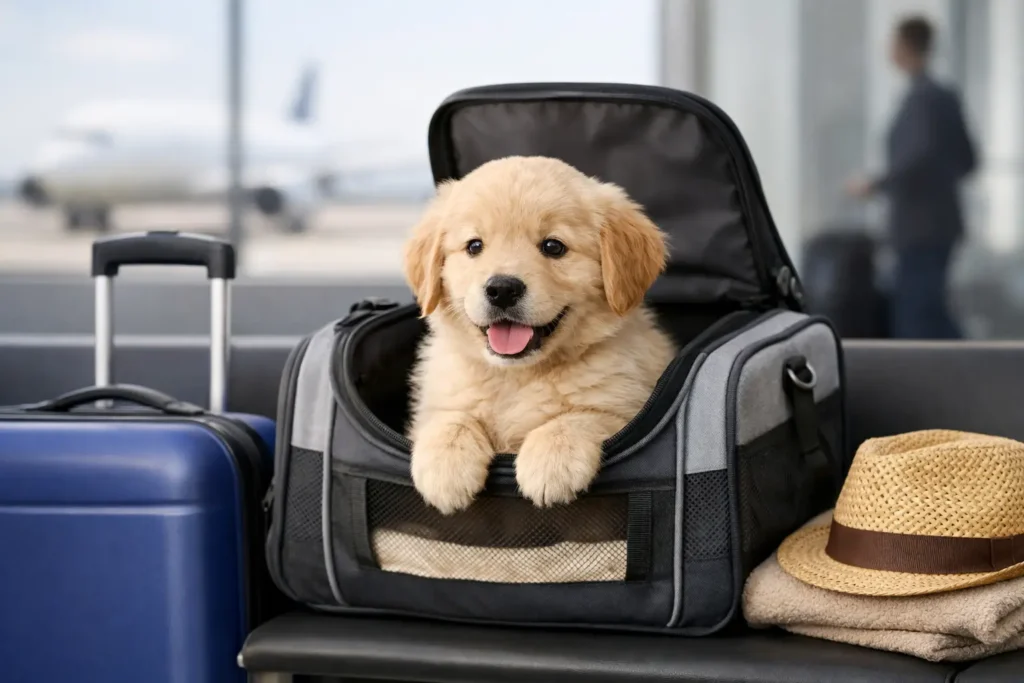
A new puppy may be small enough to carry in one arm, but travel is still a big experience for them. If you are asking when can puppies travel, the safest answer is: once they are old enough, healthy enough, and properly prepared for the type of trip ahead. A short drive home is very different from a long road journey or an airline flight.
For families in Malaysia, planning ahead helps protect a puppy’s health and makes the first journey less stressful for everyone. The goal is not simply to get your puppy from one place to another. It is to make sure they arrive calm, safe, and ready to settle into their new home.
When Can Puppies Travel Safely?
Most puppies can travel locally with their new family from around 8 weeks old, provided they have been weaned, examined by a veterinarian, and are well enough to travel. This is commonly the age when puppies begin moving to their permanent homes. However, age alone should never be the only deciding factor.
A puppy should be eating independently, alert, maintaining a healthy body condition, and free from vomiting, diarrhea, coughing, or unusual tiredness. Very young puppies can struggle to regulate body temperature and may become dehydrated more quickly than adult dogs. A long, hot, noisy trip can be overwhelming, especially for a small breed puppy.
For travel that involves airline rules, crossing state or international borders, or staying away from home for several days, the minimum age may be higher. Airlines, transport providers, and destination authorities can set their own requirements. Some may require particular vaccinations, a veterinary health certificate, an approved carrier, or an older minimum age. Always confirm the current requirements directly before booking.
The First Ride Home Matters
For many families, the first trip is the journey from the pet shop or breeder to home. This is usually suitable from 8 weeks onward if the puppy has received appropriate care and the journey is planned properly. Even a 30-minute drive can feel long to a puppy leaving its littermates for the first time.
Bring a secure carrier or travel crate that is large enough for the puppy to stand, turn around, and lie down comfortably. Add a clean towel or soft bedding, but avoid loose items that could bunch up around a very young puppy. Keep the carrier stable on the floor behind a front seat or securely fastened according to the carrier design.
Do not let a puppy sit on someone’s lap in a moving car. It may feel comforting, but it is unsafe if the driver brakes suddenly or the puppy becomes frightened. Puppies can also slip under seats, chew unsafe objects, or distract the driver. A properly secured carrier is the safest choice.
Keep the car comfortably cool, especially in Malaysia’s warm weather. Never leave a puppy alone in a parked vehicle, even for a few minutes. Interior temperatures rise quickly and can become dangerous before you realize it.
Vaccinations and Social Exposure Before Travel
Puppies begin a series of core vaccinations at a young age, but they are not fully protected after the first injection. Your veterinarian will advise on the vaccination schedule based on the puppy’s age, health, and local disease risks. Until the vaccination series is complete, it is wise to limit exposure to places where unknown dogs may have been.
That does not mean your puppy must never leave the house. Safe, controlled exposure is valuable for confidence and social development. Your puppy can travel in a clean carrier, meet healthy vaccinated dogs you know, or visit safe private spaces. The greater concern is letting an incompletely vaccinated puppy walk on heavily used public ground, such as dog parks, rest-stop grass, pet-store floors, or shared apartment pet areas.
Before any longer trip, ask your veterinarian whether your puppy is ready based on its vaccination status. This is especially helpful if you plan to stay at a pet-friendly hotel, visit relatives with dogs, or use public transportation.
Car Travel With a Young Puppy
A puppy does not need to wait until adulthood to become a good car traveler. In fact, short and positive rides early in life can help prevent motion sickness and fear later on. The key is to start gradually rather than taking a nervous puppy on an immediate four-hour drive.
Begin with a few minutes in the parked car while your puppy rests in the carrier. Then take a short drive around the neighborhood. Keep your voice calm and return home before the puppy becomes overly distressed. Over several outings, you can slowly build up the time.
For journeys longer than two hours, plan regular stops for water, a calm toilet break, and a chance to stretch in a safe area. Keep your puppy on a leash or harness before opening the carrier. A frightened puppy can run quickly in an unfamiliar place.
Avoid feeding a full meal immediately before departure, particularly if your puppy gets carsick. A light meal a few hours before travel is often easier on the stomach, but follow your veterinarian’s guidance for very young or tiny puppies that need regular feeding. Bring water, a bowl, poop bags, paper towels, spare bedding, and any prescribed medication.
If your puppy drools heavily, vomits, cries continuously, or seems very anxious during car rides, speak with your veterinarian. Do not give human motion-sickness medicine or calming products unless a veterinarian specifically says they are safe for your puppy.
When Can Puppies Fly?
Flying requires more planning than driving, and not every puppy is a suitable candidate for air travel. Airlines commonly have minimum-age policies, carrier rules, temperature restrictions, breed restrictions, and limits on the number of pets allowed per flight. These policies vary, so there is no single age that applies to every airline.
For many trips, puppies need to be at least 8 weeks old, but some airlines require them to be 10, 12, or even 16 weeks old. International travel may require additional time because destinations can require rabies vaccination, a waiting period after vaccination, import permits, microchipping, or veterinary certification. Rabies rules are particularly important because many destinations will not accept a puppy that is too young to receive a valid rabies vaccine.
Whenever possible, a healthy puppy should travel in the cabin with the family in an airline-approved carrier placed under the seat. Cargo travel involves more variables, including handling, noise, temperature, and separation from the owner. It may be necessary in some cases, but it deserves careful consideration, particularly for very young puppies and flat-faced breeds such as French Bulldogs.
Book only after confirming the airline’s current pet policy and discussing your puppy’s fitness to fly with a veterinarian. Do not sedate a puppy for a flight unless your veterinarian gives clear instructions. Sedation can affect breathing and balance, and many airlines discourage it.
Signs Your Puppy Should Stay Home
Sometimes delaying a trip is the most caring choice. A puppy should not travel if it is sick, has diarrhea or vomiting, is recovering from a procedure, has not been cleared after a health concern, or is unusually quiet and weak. Puppies can deteriorate faster than adult dogs, so changes in appetite, energy, or stool should be taken seriously.
It is also reasonable to postpone nonessential travel during the first few days after bringing a puppy home. This period is already full of change: new smells, new people, new sleeping routines, and learning where to toilet. Giving your puppy time to settle can build confidence before a longer family visit or holiday.
A Simple Travel Checklist for New Owners
Before leaving, make sure your puppy has identification, vaccination and health documents if needed, and a secure collar or harness with an ID tag. Pack enough familiar food for the trip and the first day or two after arrival. A sudden food change while traveling can upset a puppy’s stomach.
Bring water, a portable bowl, cleaning supplies, poop bags, a leash, bedding, and a favorite safe toy. Keep veterinary contact information available, particularly when traveling far from home. For longer trips, locate a veterinary clinic near your destination before you leave.
At Pet Time, families can ask about a puppy’s health records, vaccination status, and practical delivery arrangements before bringing a new companion home. Clear documentation and straightforward guidance make it easier to plan the first journey with confidence.
Your puppy does not need a perfect trip. A little whining, an accident, or a nervous first ride can happen. What matters is choosing the right time, keeping the journey safe and gentle, and giving your new family member a quiet welcome when you arrive.