
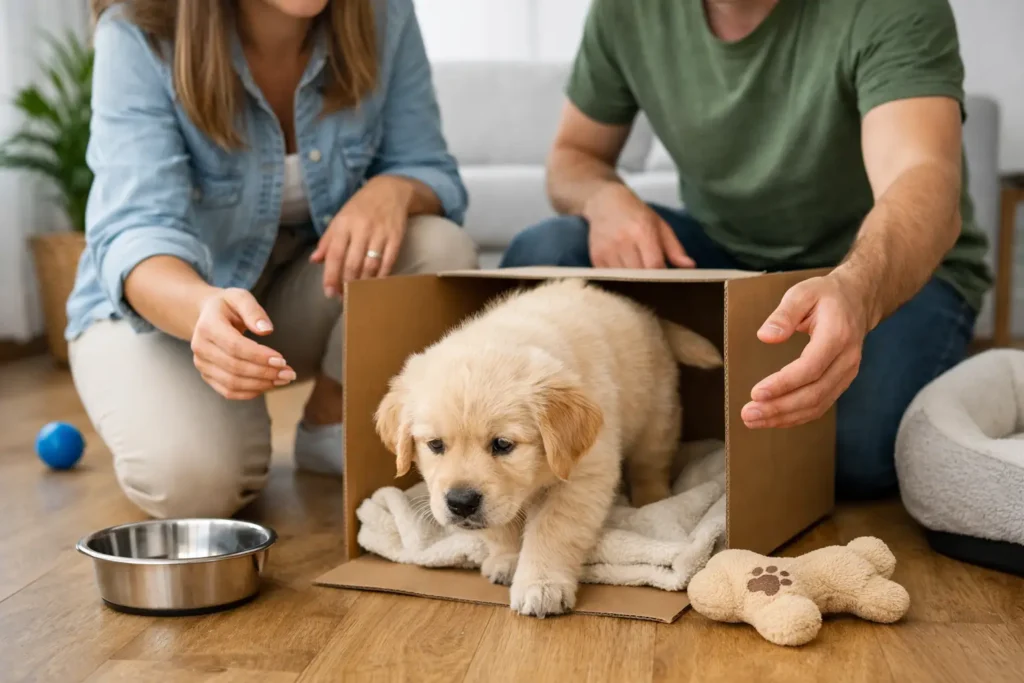
A new puppy may arrive with a wagging tail, but the first few hours can feel big for everyone involved. New smells, unfamiliar voices, car rides, children, and another pet can quickly become overwhelming. Knowing how to introduce puppy home calmly gives your new companion time to settle, helps prevent avoidable accidents, and starts your relationship with trust rather than pressure.
The goal is not to make your puppy meet every person, explore every room, or pose for photos on day one. The goal is simpler: help them feel safe. A quiet, predictable welcome is one of the kindest things you can offer a puppy after leaving their previous environment.
Prepare Your Home Before Your Puppy Arrives
Set up one comfortable puppy area before bringing your new family member home. This can be a corner of the living room, a playpen, or a crate placed somewhere calm where the family spends time. Include a comfortable bed, fresh water, a few safe chew toys, and puppy pads if you are using them during toilet training.
Puppy-proofing matters because young dogs explore with their mouths. Put away electrical cords, cleaning products, medications, small objects, shoes, and foods that are unsafe for dogs. Keep bins covered, close doors to rooms that are not ready for puppy access, and check your balcony or yard for gaps where a small puppy could slip through.
Try not to change everything at once. If you have received feeding advice or a current food recommendation, begin with that routine before switching foods. A sudden diet change, combined with the stress of moving, can upset a puppy’s stomach. If you plan to change food later, do it gradually over several days with guidance from your veterinarian.
It also helps to decide family rules ahead of time. Agree on where the puppy will sleep, which rooms are off-limits, what command words you will use, and who is responsible for meals, toilet breaks, and early-morning care. Consistency is much easier when everyone starts on the same page.
How to Introduce a Puppy Home After the Car Ride
When you arrive, carry or lead your puppy straight to the toilet area first. Give them several quiet minutes to sniff and relieve themselves. Praise gently when they go in the right place, but avoid loud celebrations that may startle them.
After that, bring your puppy into their prepared area rather than giving them access to the whole house. Sit nearby and let them investigate at their own pace. Some puppies will be curious immediately; others may hide, whine, yawn, lick their lips, or fall asleep. All of these responses can be normal after a major change.
Keep voices low and movements slow. Let the puppy approach you instead of reaching over their head or passing them from person to person. If they come close, offer a gentle stroke under the chin or along the chest. Young children should sit on the floor and be supervised closely, so the puppy does not feel chased, squeezed, or cornered.
A busy welcome can wait. If friends and relatives are excited to meet the puppy, ask them to visit another day. Your puppy does not need a party. They need rest, water, a safe place to sleep, and a few calm people who make the new home feel predictable.
Let Children Build Trust Slowly
For families, teaching children how to greet a puppy is just as important as teaching the puppy household rules. Explain that puppies need quiet time when eating, chewing, sleeping, or resting in their crate. No one should pull ears or tails, put their face close to the puppy’s face, or take toys away by force.
Give children simple ways to help, such as refilling water with an adult, helping with supervised training, or tossing a treat when the puppy responds to their name. This builds a positive bond without placing too much pressure on the puppy.
Introducing Your Puppy to an Existing Dog or Cat
If another pet already lives in your home, do not assume they will become best friends immediately. A careful introduction protects both animals and lowers the chance of fear-based behavior.
For a resident dog, start outdoors or in another neutral, quiet area when possible. Have one adult handle each dog, keep leashes loose, and allow brief sniffing. Then take a short walk together before bringing them indoors. Inside the home, separate food bowls, beds, toys, and high-value treats at first. Even a friendly dog may guard familiar resources when a new puppy arrives.
For a cat, give the cat an escape route and a puppy-free space. Use a baby gate, playpen, or leash so the puppy cannot chase. Let the cat observe from a comfortable distance. Never force face-to-face contact. Progress may take days or weeks, especially with a shy cat or an energetic puppy.
Watch body language rather than relying only on wagging tails. Stiff posture, hard staring, growling, repeated hiding, raised fur, or snapping means the animals need more space. A growl is communication, not bad behavior. Calmly separate them and try shorter, more controlled sessions later.
Keep the First Night Simple
The first night is often the hardest part of bringing home a puppy. Your puppy may miss their littermates, wake up more often than expected, or cry when left alone. This does not mean you have made the wrong choice or that the puppy is being difficult. They are adjusting.
Place the crate or bed near your sleeping area for the first few nights if possible. Your presence can be reassuring, and you are more likely to notice when the puppy needs a toilet break. Keep nighttime trips boring and brief: go to the toilet spot, offer quiet praise, then return to bed. Playtime at 2 a.m. can accidentally teach your puppy that waking up is exciting.
Avoid giving your puppy full access to the house overnight. A small, safe sleeping space helps with toilet training, prevents chewing accidents, and makes it easier for the puppy to relax. The right setup depends on the puppy’s age, size, and confidence, but safety should come before freedom.
Create a Routine for the First Week
Puppies thrive on predictable rhythms. During the first week, aim for regular meal times, toilet breaks, short play sessions, naps, and bedtime. Young puppies usually need frequent toilet opportunities, especially after waking, eating, drinking, or energetic play.
Keep training short and positive. Begin with their name, coming when called from a short distance, and rewarding calm behavior. Use small treats, praise, or a favorite toy. Harsh corrections can make a puppy fearful and may damage the trust you are trying to build.
It is also wise to schedule a veterinary visit soon after your puppy comes home, even when they have been vaccinated and health-checked. Bring any health records, vaccination documentation, and questions about feeding, parasite prevention, grooming, and future vaccine schedules. A trusted seller should provide transparent health information and help you understand the care your puppy has already received.
For first-time owners, preparing supplies before pickup removes much of the stress. Pet Time can help families choose practical essentials such as suitable food, a crate or cage, bedding, a leash, grooming items, and safe toys, so the puppy’s first day starts with what they need already in place.
When to Ask for Help
A little nervousness, a reduced appetite for a short time, and extra sleep can happen during the adjustment period. However, contact a veterinarian promptly if your puppy has repeated vomiting, ongoing diarrhea, extreme weakness, trouble breathing, refuses water, or seems unusually distressed.
For behavior concerns, early support is helpful. Persistent fear, resource guarding, or conflict with another household pet is easier to address with calm management and qualified advice than by waiting for it to worsen. Every puppy has a different personality, and a slower introduction is often the better choice.
Your puppy does not need a perfect first day. They need patient people, a safe place to rest, and a routine they can learn to trust. Give them that gentle beginning, and each quiet meal, nap, and happy greeting will help turn a new house into home.