
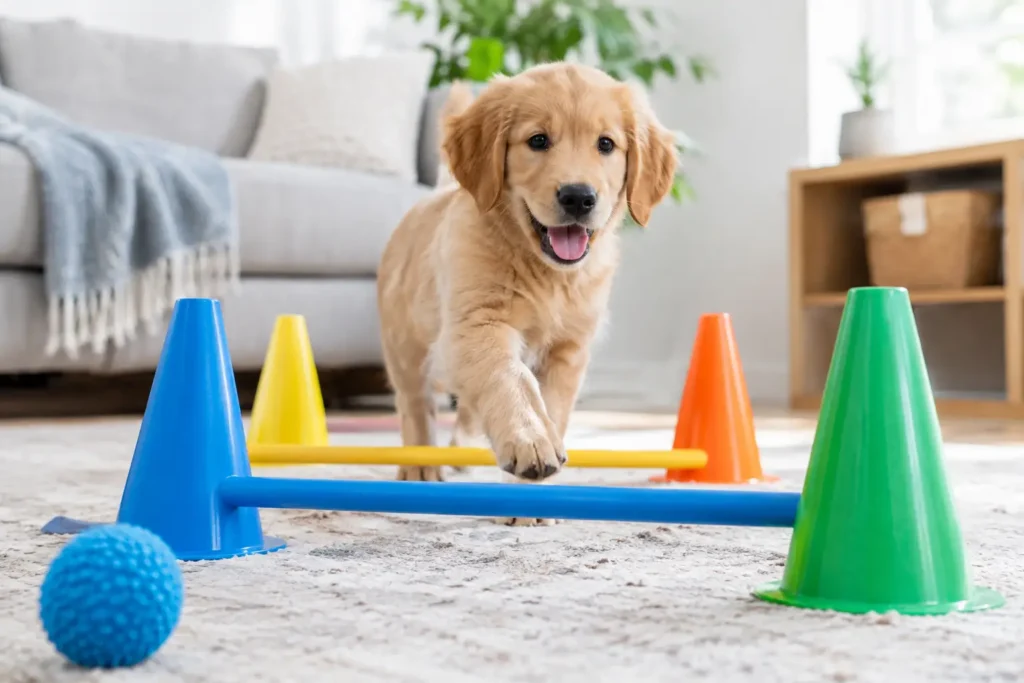
A puppy with extra energy does not need a big yard to have a good day. The best indoor puppy exercise ideas turn a living room, hallway, or quiet corner into a safe place to learn, play, and build trust with the family. This is especially helpful for young puppies that are still completing their vaccination schedule, as well as families managing rain, heat, apartment living, or busy workdays.
Puppies need more than physical movement. Short games that ask them to sniff, think, listen, and settle can be surprisingly tiring. The goal is not to wear your puppy out with nonstop activity. It is to offer age-appropriate exercise in small, positive sessions that support healthy growth and good behavior.
Why Indoor Puppy Exercise Matters
A bored puppy will often find a job for themselves: chewing slippers, barking at every sound, digging at bedding, or chasing family members through the house. These behaviors are not a sign of a bad puppy. They usually mean the puppy needs guidance, attention, rest, or a better outlet for their energy.
Indoor play is also useful before your puppy is ready for regular walks in public areas. Your veterinarian can advise when it is safe to visit parks, sidewalks, and other places where dogs have been. Until then, a clean home environment and controlled play with healthy, appropriately vaccinated dogs can help keep your puppy active without taking unnecessary risks.
For very young puppies, several five- to 10-minute sessions are often better than one long workout. Large-breed puppies, tiny breeds, and flat-faced breeds such as French Bulldogs may need especially careful pacing. If your puppy is panting heavily, losing interest, limping, or becoming overly wild, stop and offer water and a calm rest.
12 Indoor Puppy Exercise Ideas to Try
1. Make mealtimes a sniffing game
Instead of placing every meal in a bowl, scatter a small portion of your puppy’s kibble across a clean towel, snuffle mat, or safe open area of the floor. Let them use their nose to search. Sniffing is mentally demanding, naturally calming, and suitable even for small homes.
Use part of the normal meal, not extra food. This keeps treat calories under control while making everyday feeding more interesting.
2. Practice puppy recall down the hallway
With two people, sit a short distance apart in a hallway or living room. One person gently holds the puppy while the other cheerfully calls their name and says, “come.” Reward the puppy with praise, a tiny treat, or a favorite toy when they reach you.
Keep the distance short and the mood light. Recall should feel like the best game in the house, never a signal that fun is about to end.
3. Try a gentle tug session
A soft, puppy-safe tug toy gives energetic puppies a controlled way to pull, chase, and engage with you. Move the toy along the floor rather than lifting it high, especially with young puppies whose joints and teeth are still developing.
Teach “drop” by pausing the game and offering a treat when your puppy releases the toy. Then start again. This builds manners without making play feel strict or frustrating.
4. Create a simple treat trail
Hide a few pieces of kibble or small treats in easy places around one room: beside a chair leg, under the edge of a towel, or near an open cardboard box. Let your puppy watch the first few placements, then gradually make the search a little harder.
Avoid hiding food near electrical cords, under furniture where your puppy could get stuck, or anywhere they may chew unsafe objects. A short search is plenty for beginners.
5. Play name-and-attention games
Say your puppy’s name once. When they look at you, mark the moment with “good” and reward them. This may sound simple, but it is one of the most useful exercises a new owner can practice indoors.
A puppy that happily checks in with you is easier to guide around visitors, doors, meals, grooming, and future walks. Do five repetitions, then take a break before your puppy loses focus.
6. Set up a low obstacle course
Use household items to make a safe mini course. A towel can become a surface to walk across, a cardboard box can become a tunnel with both ends open, and two cushions can create a path to step around. Guide your puppy with treats and praise rather than pushing or pulling them.
Keep everything low and stable. Puppies should not repeatedly jump off sofas, chairs, or high platforms, as hard landings can strain growing joints. Confidence matters more than speed.
7. Teach “find it”
Hold a treat near your puppy’s nose, toss it a short distance, and say “find it.” Once they understand the game, toss the treat behind a chair or just outside their direct view. This gives them a safe burst of movement plus a chance to use their nose.
“Find it” is also useful when your puppy is getting too excited. A few scattered treats can redirect their attention away from jumping or nipping and toward a calm, rewarding task.
8. Use a food-stuffed toy for quiet exercise
A puppy-safe rubber food toy filled with part of their meal can keep them engaged while encouraging licking, chewing, and problem-solving. For a longer activity, use softened kibble or a suitable puppy food mixture and chill it before serving.
Always choose a toy sized for your puppy and supervise at first. Remove damaged toys promptly. Quiet enrichment is valuable because puppies also need to learn that not every moment at home is a high-energy event.
9. Practice sit, down, and touch
Basic training counts as exercise because it asks your puppy to think, move, and pay attention. Start with “sit,” then teach a hand target by holding out your palm and rewarding your puppy for touching it with their nose. A hand target can later help you guide your puppy away from doors, visitors, and distractions.
Keep training rewards tiny. You can use kibble from the daily food allowance, especially for puppies who are motivated by meals.
10. Have a safe game of chase the toy
Drag a soft toy slowly across the floor and let your puppy follow it. Pause often so they can catch it. The point is to satisfy the urge to chase in a controlled way, not to make your puppy race until they are exhausted.
Do not encourage chasing hands, feet, or loose clothing. It may seem cute when they are small, but it can become painful and confusing as they grow.
11. Build confidence with new surfaces
Place a yoga mat, flattened cardboard, a clean bath towel, or a firm cushion on the floor. Reward your puppy for stepping onto each surface voluntarily. This small exercise helps puppies become comfortable with different textures, which can make future grooming visits, car rides, and new environments less stressful.
Let your puppy choose the pace. If they hesitate, place treats nearby rather than forcing them onto the surface.
12. Finish with a settle-on-the-mat routine
Exercise is more helpful when it ends with calm. After a game, guide your puppy to a bed or mat, give them a chew or a few treats, and reward relaxed behavior such as lying down quietly. Over time, your puppy learns that play has a clear ending.
This is particularly useful for families with children. Everyone can enjoy playtime, then help the puppy settle before meals, calls, homework, or guests arrive.
How Much Indoor Exercise Does a Puppy Need?
There is no single number that fits every puppy. A lively Pomeranian, curious Beagle, gentle Maltese, and growing Golden Retriever will have different needs, even at the same age. Breed tendencies matter, but personality, sleep, health, and daily routine matter just as much.
Most puppies do well with a mix of brief active play, simple training, sniffing games, chew time, and plenty of sleep. Young puppies may sleep 18 to 20 hours a day. A puppy who becomes mouthy, clumsy, or unable to settle may be overtired rather than under-exercised.
Watch your puppy instead of chasing a perfect schedule. A content puppy is usually able to play, eat, rest, and reconnect with the family without constant frustration. If you have questions about your puppy’s activity level, growth, or vaccination timing, ask your veterinarian for advice tailored to their age and breed.
Keep Indoor Play Safe and Positive
Before starting, puppy-proof the area. Put away wires, small items that can be swallowed, medications, cleaning products, and fragile objects. Choose non-slip flooring where possible, particularly for fast games. Tile floors can be slippery for small paws, so a rug or mat may offer better footing.
Supervision matters with toys, food puzzles, cardboard, and anything your puppy might tear apart. Also remember that some indoor activity should be calm. A puppy who only learns exciting games may struggle to relax when the family is busy.
At Pet Time, we believe a healthy puppy starts with caring daily routines, not complicated equipment. A few safe toys, a comfortable bed, suitable food, and patient family attention can make a meaningful difference from the first week at home.
Choose one or two activities today, keep the session short, and notice what makes your puppy’s eyes light up. That small daily play ritual can become the moment your new family member looks forward to most.