
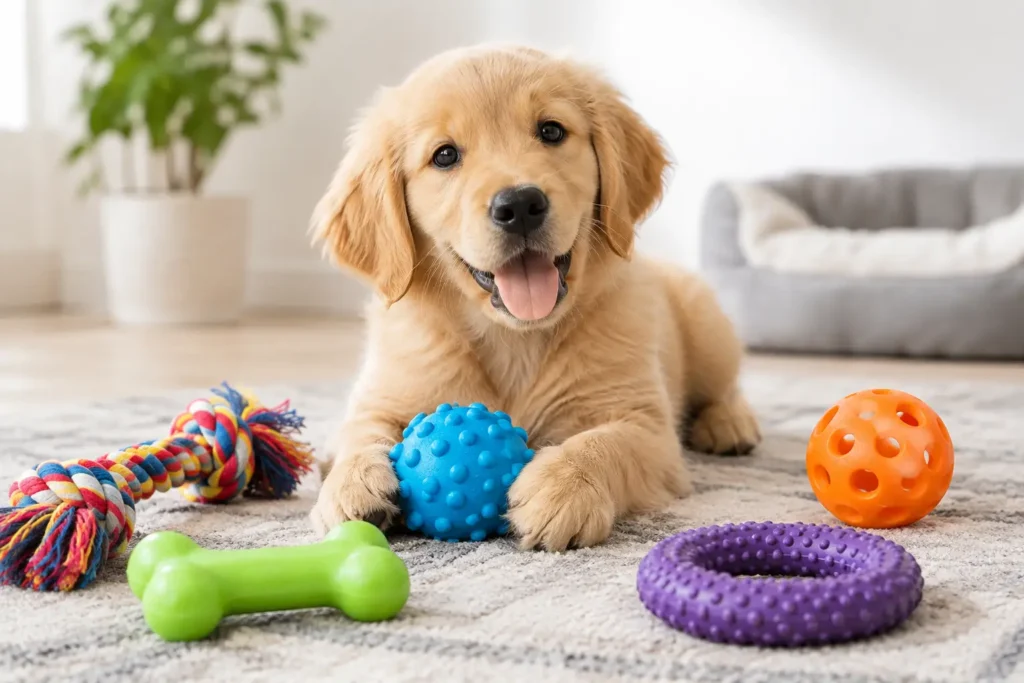
A puppy can turn almost anything into a toy: a slipper, a phone charger, a table leg, or the corner of a favorite cushion. Choosing the best dog toys for puppies early gives your new family member a safer outlet for chewing, playing, learning, and settling into life at home. The right toy is not just a cute accessory. It can help protect your belongings, build confidence, and make daily training easier.
For first-time puppy owners, the shelves can feel overwhelming. Plush toys, rubber chews, ropes, balls, puzzles, squeakers – which ones are actually worth bringing home? Start with your puppy’s age, size, chewing style, and personality. A tiny Maltese puppy needs a very different toy from a growing Golden Retriever or energetic Corgi.
What Makes a Good Puppy Toy?
A good puppy toy should be safe, appropriately sized, and useful for a real purpose. Puppies explore with their mouths, especially while teething, so toys need to stand up to regular chewing without breaking into small pieces. Avoid anything that is too hard for young teeth, too small to be swallowed, or made with loose parts that can come off during play.
Size matters more than many owners realize. A toy that fits a Chihuahua or Pomeranian may be a choking risk for a Beagle or French Bulldog. On the other hand, an oversized toy can be frustrating for a very young puppy to carry or chew. Choose toys labeled for puppies or small, medium, or large breeds, then check them yourself before each play session.
It also helps to offer variety. Puppies become bored quickly when every toy feels the same. Keep a small rotation of chew toys, comfort toys, interactive toys, and training toys. Bringing out only a few at a time makes familiar toys feel exciting again.
Best Dog Toys for Puppies by Need
Soft rubber chew toys for teething
Teething is one of the biggest reasons puppies chew furniture, hands, and household objects. Soft, flexible rubber chew toys give sore gums a more appropriate place to bite. Look for puppy-specific rubber that has enough give when pressed with your thumb. Very hard nylon or bone-like chews can be too tough for developing teeth.
Some rubber toys can be chilled for extra relief, but always follow the product instructions. You can also use toys with ridges and grooves, which give puppies different textures to explore. If your puppy is chewing intensely, offer the toy before they start looking for trouble, such as after a nap or during a busy evening at home.
Plush comfort toys for quiet time
A soft plush toy can be reassuring when a puppy first arrives in a new home. This is especially helpful during the first few nights, when they may miss the warmth and familiar smells of their littermates. A small, durable plush toy can become part of a comforting bedtime routine.
Choose one with embroidered features rather than plastic eyes, buttons, or decorations that can be chewed off. Squeakers can be fun, but some puppies become determined to rip open a toy to find the sound inside. If your puppy is a strong chewer, reserve plush toys for supervised cuddling and gentle games instead of leaving them alone with one for hours.
Tug toys for play and training
A soft rope or fabric tug toy gives puppies a healthy way to use their natural desire to pull and shake. Gentle tug games can teach useful manners when done correctly. Let your puppy grab the toy, keep the movement low and controlled, and pause if teeth touch your hand. This helps them learn that toys are for biting, not people.
Tug should never be rough enough to strain a young puppy’s neck or jaw. Avoid jerking the toy upward, especially with small breeds and very young puppies. A simple cue such as “drop” or “give” during play can also become the foundation for better impulse control later.
Lightweight balls for short fetch games
Many puppies love to chase, but long, repetitive fetch sessions are not necessary for growing joints. A lightweight, puppy-sized ball is ideal for a few short tosses on a safe, non-slippery surface. This is a great option for puppies that are curious, energetic, and motivated by movement.
Never use a ball that is small enough to fit fully behind your puppy’s back teeth. Tennis balls may work for some larger puppies, but they can be too large for toy breeds and may be quickly damaged by determined chewers. A soft rubber ball designed for dogs is usually the safer choice.
Treat-dispensing toys for busy minds
A treat-dispensing toy turns snack time into a small problem-solving activity. Your puppy learns to nudge, roll, lick, and work patiently for a reward. This can be especially helpful when you need a calm activity during meal preparation, work calls, or crate time.
Use part of your puppy’s regular kibble rather than adding too many extra treats. For puppies that are still learning, choose a toy with an easy opening so they experience success quickly. If the puzzle is too difficult, they may lose interest or become frustrated. As their confidence grows, you can gradually make the challenge harder.
Lick mats for calm moments
Lick mats are a simple but useful option for puppies who need help settling down. Spread a thin layer of puppy-safe wet food, softened kibble, or another veterinarian-approved topping over the surface. Licking is repetitive and soothing for many dogs, making a lick mat useful after grooming, during nail handling practice, or while visitors are at the door.
Always supervise at first to make sure your puppy licks rather than chews the mat. It is a calming tool, not an indestructible chew toy. Clean it after each use, especially in Malaysia’s warm weather, where leftover food can spoil quickly.
Crinkle and squeaky toys for curious puppies
Sound-based toys can be wonderful for puppies that respond to noise and movement. A gentle crinkle toy or a small squeaker may encourage shy puppies to investigate and play. They are also useful for redirecting a puppy’s attention during short training sessions.
The trade-off is that noisy toys are not for every household. Some puppies become overstimulated by squeaking, while some owners discover that a squeaker at 6 a.m. is less charming than expected. Use these toys for supervised daytime play and put them away when it is time to rest.
How Many Toys Does a Puppy Really Need?
You do not need to buy every toy in the store before bringing your puppy home. A practical starter set includes a soft chew toy, a rubber teething toy, a comfort toy, a tug toy, and one treat-dispensing or puzzle toy. This gives your puppy choices without filling the house with items they ignore.
As you get to know your puppy, you will see clear preferences. Some puppies want to carry a plush toy everywhere. Others would happily spend twenty minutes working on a food toy. Active breeds may enjoy chase games, while companion breeds may prefer close, gentle play with their people. There is no single best toy for every puppy.
Toy Safety Checks Every Owner Should Make
Inspect toys often, especially during the teething months. Throw away toys that have torn seams, exposed stuffing, broken squeakers, cracked rubber, or loose threads. A toy can be safe when new and become unsafe after a few determined chewing sessions.
Supervision is still the best safety feature. Until you know how your puppy plays, stay nearby with new toys. If they are trying to swallow pieces, shredding fabric, or guarding a toy aggressively, remove it calmly and replace it with a safer option. A toy should encourage happy play, not create an emergency.
Make Play Part of Your Puppy’s Routine
Toys work best when they support a predictable daily rhythm. Offer a chew after meals, a short tug or fetch game when your puppy has energy, and a calming lick or comfort toy before rest. This teaches your puppy that there is a time to play, a time to chew, and a time to relax.
At Pet Time, we encourage new puppy owners to prepare a simple toy selection before their puppy comes home, along with food, bedding, and basic care supplies. Starting with safe, age-appropriate toys helps your puppy feel comfortable while giving your family more enjoyable moments together.
Watch what makes your puppy’s eyes light up, but keep safety first. The best toy is often the one that matches your puppy’s stage of life, keeps them engaged without frustration, and gives them a positive reason to choose their own toy instead of your furniture.