
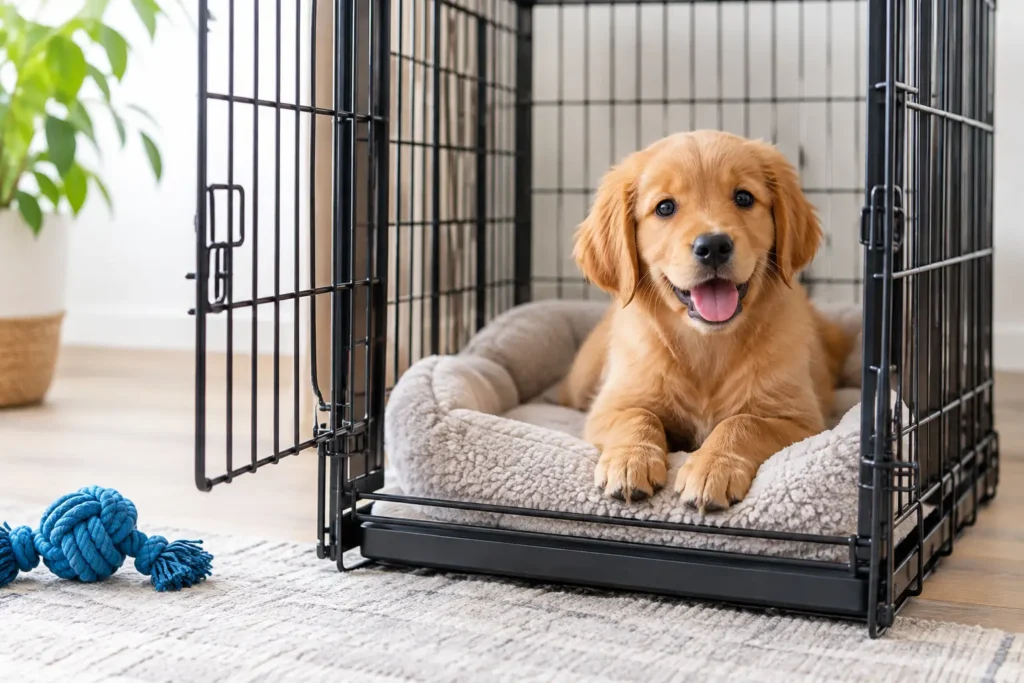
A crate can become your puppy’s favorite place to rest, not a place they fear. If you are searching for how to crate train puppy advice, the most helpful starting point is simple: move at your puppy’s pace. A new puppy has already experienced a big change in smells, people, routines, and sleeping arrangements. Gentle crate training gives them a predictable little space where they can settle, sleep safely, and begin learning household routines.
Crate training also helps families manage the early weeks with less stress. It supports toilet training, prevents chewing when direct supervision is not possible, and gives your puppy a quiet break when the house is busy. The goal is never to shut a puppy away for long periods. The goal is to teach them that the crate is comfortable, safe, and always associated with good things.
How to Crate Train Your Puppy Step by Step
1. Choose a crate that fits your puppy now
Your puppy should be able to stand up, turn around, and lie down comfortably inside the crate. A crate that is far too large can make toilet training harder because some puppies may sleep at one end and potty at the other. If you are buying a crate for a puppy who will grow quickly, choose an adult-size crate with a divider panel.
Wire crates offer airflow and visibility, while plastic travel crates can feel more den-like for some puppies. Soft-sided crates are lightweight but are usually better for puppies that are already calm and not likely to chew. There is no single best crate for every breed or home. What matters most is a secure design, proper size, and a location where your puppy can feel close to the family without being in the middle of constant activity.
Place a washable mat or thin bedding inside if your puppy is not chewing or toileting on it. Add a safe chew toy, but avoid leaving loose items that can be torn apart or swallowed. For young puppies, simple is often safest.
2. Let your puppy explore without closing the door
Set up the crate with its door open and allow your puppy to investigate it freely. Drop a few small treats just inside the entrance, then gradually place them farther toward the back. Speak calmly and let your puppy decide when to step in. Do not push, carry, or force them into the crate.
You can also feed meals near the crate at first, then just inside the doorway, and eventually at the back of the crate. This creates a positive association without pressure. Some puppies walk in confidently on day one. Others may need several short sessions over a few days. That difference is normal and does not mean your puppy is being difficult.
3. Start closing the crate door for very short periods
Once your puppy is comfortable eating or resting inside, close the door for a few seconds while you stay nearby. Give a treat through the door, then open it before your puppy becomes upset. Repeat this several times, slowly increasing the time from seconds to a minute or two.
Keep your voice relaxed and your movements ordinary. If the crate door only closes when you are leaving the house, your puppy may quickly learn to worry about it. Instead, practice short crate sessions while you read, prepare a meal, or sit nearby. Your puppy learns that a closed crate door is simply part of normal life and that you always come back.
4. Build a routine around potty breaks
A crate is useful for toilet training because most puppies prefer not to soil their sleeping area. However, puppies cannot hold their bladder for long, especially after waking up, eating, drinking, playing, or getting excited. Take your puppy outside or to their designated potty area before crate time and immediately after they come out.
Very young puppies may need overnight potty breaks as well. Do not expect an eight-week-old puppy to stay dry through a full night. A general guideline is that puppies can hold their bladder for roughly one hour per month of age, up to a point, but individual needs vary. Small breeds, anxious puppies, and puppies with lots of water or activity may need more frequent trips.
If your puppy has an accident in the crate, do not scold them. Clean the area thoroughly with an enzyme-based pet cleaner and adjust the schedule. Accidents usually mean the crate time was too long, the crate was too large, or your puppy needed a potty break sooner.
5. Practice calm departures and returns
When your puppy can relax in the crate for a few minutes while you are nearby, start stepping away briefly. Walk into another room for 10 to 20 seconds, then return quietly. Increase the distance and time little by little.
Avoid making departures emotional. A long goodbye can signal that something worrying is about to happen. The same goes for returns. Wait until your puppy is calm before opening the door, even if that means pausing for a few seconds. This helps prevent the crate from becoming linked with frantic excitement.
For puppies that enjoy food toys, a puppy-safe stuffed toy with part of their meal can make crate time more rewarding. Use this only when you know your puppy can handle the toy safely without breaking off pieces. Supervise new toys before leaving them with your puppy.
6. Handle whining with patience, not punishment
Most puppies make some noise when learning to settle alone. First, consider what the whining may mean. Does your puppy need to potty? Are they too hot, cold, hungry, or overstimulated? Have they had enough exercise and a chance to settle before going in? Meeting these needs prevents many crate-training problems.
If you know your puppy is safe and has recently gone potty, give them a short moment to settle rather than opening the crate the instant they vocalize. Opening the door during active whining can accidentally teach them that crying brings release. When there is a brief quiet pause, calmly open the door or offer reassurance.
That said, prolonged panic is different from mild protest. Heavy drooling, frantic biting at the crate, repeated attempts to escape, or extreme distress means the training has moved too fast. Go back to shorter, easier sessions and rebuild confidence. Never bang on the crate, yell, or use the crate as punishment. A frightened puppy needs more support, not a harsher lesson.
7. Make nighttime crate training easier
For the first few nights, keep the crate beside your bed or close to where someone sleeps. Your puppy will be reassured by familiar voices and sounds, and you will be more likely to hear when they need a potty break. A consistent bedtime routine helps: potty trip, a few quiet minutes, into the crate with a safe comfort item, lights down, and minimal talking.
Some families cover part of a wire crate with a light blanket to reduce visual stimulation. Make sure airflow remains clear and your puppy does not pull the cover through the bars. Other puppies settle better when they can see the room. Watch your puppy’s response and choose the setup that helps them relax.
Common Crate Training Mistakes to Avoid
The fastest way to create crate anxiety is to use the crate only when you are frustrated, leaving for hours, or trying to stop unwanted behavior. Your puppy should also enjoy short crate rests while you are home. This makes the crate a normal part of their day rather than a sign of isolation.
Another common mistake is expecting too much too soon. A puppy may be ready for a few minutes alone today and half an hour tomorrow, but progress is rarely perfectly straight. Teething, a busy weekend, visitors, or a change in routine can make a puppy temporarily less settled. Return to easier steps when needed.
Finally, do not confuse crate time with all-day confinement. Puppies need play, training, gentle socialization, affection, and regular bathroom breaks. The crate is one helpful tool in a full care routine, not a substitute for interaction.
When Is Your Puppy Ready for More Freedom?
Your puppy is ready for more supervised freedom when they can settle calmly, avoid frequent accidents, and show less interest in chewing furniture or unsafe household items. Start with one puppy-proofed room for a short period, then gradually expand access. Continue using the crate for naps, nighttime, travel, and times when you cannot supervise closely.
When you bring home a health-checked puppy from Pet Time, setting up the crate before arrival can make the first day feel much calmer for everyone. Keep treats, a comfortable bed, cleaning supplies, and safe toys ready so you can focus on helping your new family member feel secure.
Every quiet nap in the crate is a small win. With consistency, kindness, and realistic expectations, your puppy will learn that their crate is not where the fun ends – it is where they can rest and feel at home.