
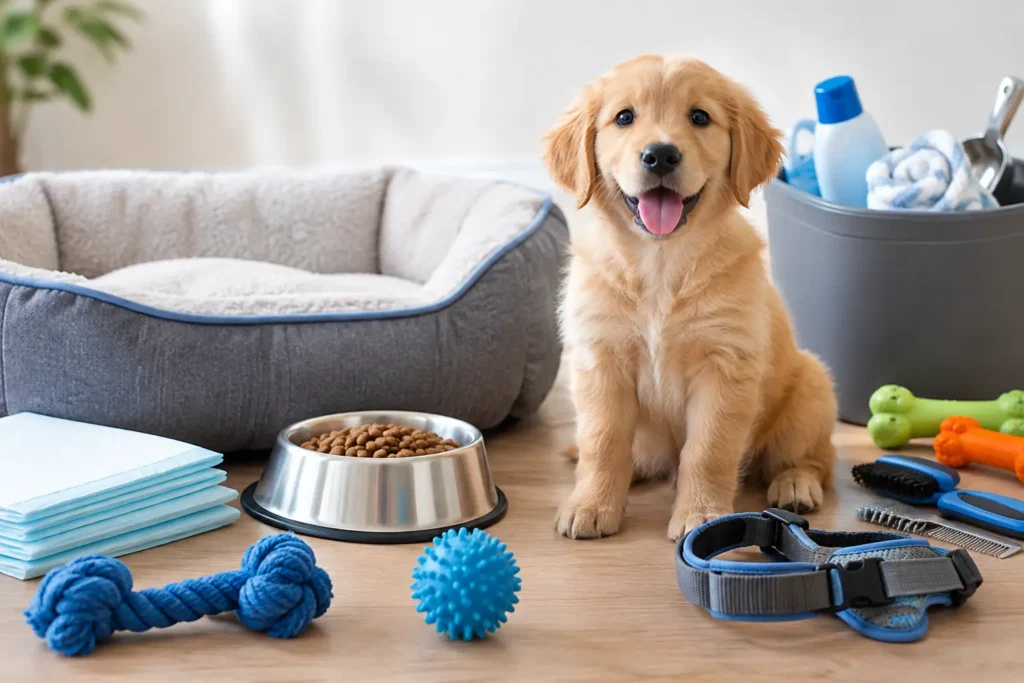
The first day with a new puppy should feel exciting, not like a last-minute trip to find kibble, pee pads, and a place for them to sleep. This puppy supplies shopping list covers what your new family member truly needs before they come home, plus a few items that can wait until you understand their personality, size, and routine.
A good setup is not about buying the most expensive item on every shelf. It is about creating a safe, calm space where your puppy can eat, rest, learn, and slowly feel at home. For first-time owners, starting with the right basics also makes house training and early bonding much easier.
Puppy Supplies Shopping List: The Day-One Basics
Have these essentials ready before your puppy arrives. They support the routines your puppy will need from the very first day: meals, toilet breaks, sleep, play, and gentle handling.
- Age-appropriate puppy food and training treats
- Two sturdy bowls for food and fresh water
- A properly sized crate or playpen
- A washable bed or soft blanket
- Collar, ID tag, leash, and harness
- Puppy pee pads and waste bags
- Safe chew toys and soft comfort toys
- Puppy shampoo, brush, nail trimmer, and toothbrush
- Enzyme cleaner for accidents
- A carrier or car restraint for safe travel
You do not need to fill your home with dozens of toys or accessories immediately. Start with reliable essentials, then add items as your puppy grows and shows what they enjoy.
Food and Feeding Supplies
Ask what food your puppy has been eating before you bring them home. A sudden food change can cause an upset stomach, even when the new formula is high quality. If you want to switch foods, do it gradually by mixing a small amount of the new food with the current food over several days.
Choose puppy food that matches your dog’s expected adult size. Small-breed puppies, such as Pomeranians, Maltese, and Chihuahuas, have different needs from larger puppies such as Golden Retrievers. Puppies need nutrition designed for growth, so avoid feeding adult dog food unless a veterinarian specifically recommends it.
A pair of easy-to-clean bowls is enough to begin. Stainless steel or ceramic bowls are usually practical because they are durable and simple to wash. Keep water available throughout the day, and place the bowls in a quiet area where your puppy will not be startled while eating.
Treats are useful for training, but small pieces are best. Your puppy will learn faster when you can reward good behavior often without turning every training session into a large snack.
A Safe Place to Sleep and Settle
Puppies need plenty of sleep, often 18 to 20 hours a day. A crate, puppy pen, or gated area gives them a secure place to rest while helping prevent chewing, accidents, and unsafe exploring when you cannot watch them closely.
The right crate should allow your puppy to stand, turn around, and lie down comfortably. It should not be so large that they can sleep at one end and use the other end as a toilet. If you are choosing a crate for a puppy that will grow quickly, a model with a divider can be a sensible option.
Add a washable bed or blanket, but keep the setup simple at first. Some puppies chew fabric, stuffing, or loose threads. If that happens, use a durable mat and supervise any softer bedding until you know they can use it safely.
Place the sleep area near the family during the first few nights. Being close to familiar voices can help a puppy settle. This does not mean they must sleep in your bed forever. It simply gives them reassurance while they adjust to a completely new environment.
Walking, Identification, and Travel Gear
A lightweight collar with an ID tag is a small item with a big purpose. Your tag should include your puppy’s name and a current phone number. Check the fit regularly because puppies grow faster than many owners expect. You should be able to slide two fingers between the collar and your puppy’s neck.
For walks, many young puppies are more comfortable in a properly fitted harness than a collar alone. A harness can reduce pressure on the neck, particularly for small companion breeds. However, fit matters more than style. A loose harness can let a frightened puppy slip free, while a tight one can rub and restrict movement.
Use a standard leash for training and neighborhood walks. Retractable leashes may seem convenient, but they can make it harder to teach loose-leash manners and maintain control around roads, other dogs, or sudden distractions.
A carrier, secured crate, or approved car restraint is also essential. Holding a puppy on someone’s lap while driving is not safe. Prepare for car rides early with short, positive trips so travel does not become stressful later.
House-Training and Cleaning Supplies
Even the best-prepared puppy will have accidents. That is part of learning, not a sign that your puppy is being difficult. Keep pee pads, waste bags, and an enzyme cleaner ready from day one.
Enzyme cleaner is worth choosing over ordinary household cleaner because it is designed to break down odor sources. If a puppy can still smell an old accident, they may return to the same spot. Avoid cleaners with strong scents or ingredients that are not pet-safe.
Pee pads can be helpful for apartment living, very young puppies, and rainy days. The trade-off is that indoor pads may slow the transition to outdoor toilet habits for some dogs. If your goal is outdoor training, take your puppy to the same toilet spot frequently, especially after waking, meals, play, and naps. Reward them immediately after they finish in the right place.
A small storage basket near the door can keep your leash, waste bags, and treats together. When a puppy needs to go, quick access matters.
Toys That Support Healthy Puppy Behavior
Puppies explore with their mouths. Chewing is normal, especially during teething, but they need safe alternatives before they decide that slippers, furniture, or phone chargers are more interesting.
Start with a few different toy types: a durable chew toy, a soft toy for comfort, and a food-dispensing toy for quiet mental activity. Rotate toys every few days rather than leaving everything out at once. This keeps familiar toys interesting without requiring a large collection.
Avoid toys that are too small, easily torn apart, or made with loose pieces that can be swallowed. Supervise new toys at first, especially if your puppy is a determined chewer. A toy that works well for one puppy may not be safe for another.
Grooming Supplies for a Healthy Start
Grooming is more than keeping your puppy cute for photos. Regular brushing, gentle paw handling, and short nail checks help your puppy become comfortable with being cared for. This is especially useful for breeds with longer or thicker coats, including Poodles, Shih Tzus, Maltipoos, and Pomeranians.
Choose a brush suited to your puppy’s coat type, along with gentle puppy shampoo and a comb for checking small tangles. You do not need to bathe a puppy too often. Frequent baths can dry the skin, while regular brushing removes loose hair and helps you notice changes in the coat or skin.
A puppy toothbrush and pet-safe toothpaste are good early additions. Begin slowly with short, positive sessions. Human toothpaste should never be used for dogs.
Nail trimming can feel intimidating, so ask a pet care professional to show you the correct technique if you are unsure. There is no harm in getting help. A calm, positive experience matters more than doing everything yourself.
Health Records and a Simple Care Folder
Keep your puppy’s vaccination records, health check information, feeding notes, and veterinary contact details together in one folder. This makes it easier to stay on schedule for follow-up vaccines, parasite prevention, grooming appointments, and future vet visits.
When bringing home a puppy from Pet Time, take time to review the health documentation and care guidance provided. Knowing your puppy’s current diet, vaccination status, and recommended next steps gives your family a more confident start.
It is also wise to puppy-proof before arrival. Move electrical cords out of reach, secure cleaning products and medicines, check balcony gaps, and remove small items that could be swallowed. Puppies can find surprising trouble in minutes, especially during their curious early weeks.
What Can Wait Until You Know Your Puppy Better
Some supplies are useful, but not urgent. Fancy outfits, multiple beds, specialty strollers, and large toy collections can wait. Your puppy may outgrow them quickly, dislike a certain material, or have a very different play style than you expected.
The same goes for buying large bags of food before you know it agrees with your puppy. Start with an appropriate amount, monitor appetite and stool quality, and ask your veterinarian for guidance if something seems off.
A prepared home tells a puppy, in the simplest possible way, that they are safe and wanted. Set up their quiet corner, keep your first few days unhurried, and give them patience while they learn the rhythm of their new family.