
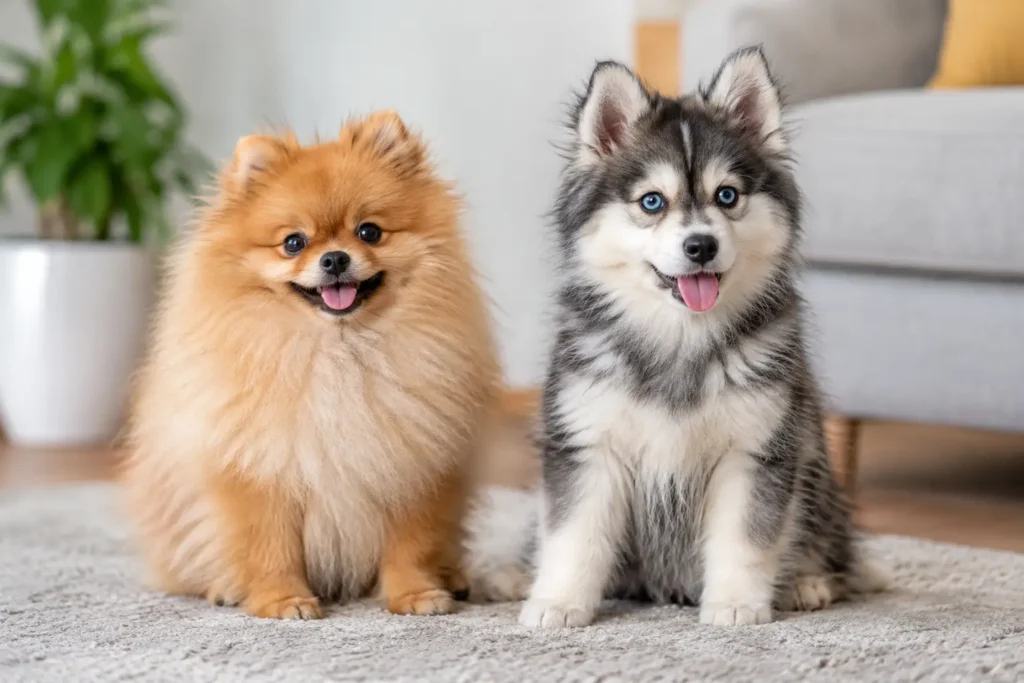
A fluffy puppy may look equally adorable in photos, but the day-to-day difference can be significant. When comparing Pomeranian vs Pomsky Malaysia, families should look beyond coat color and cute faces. Your home size, working schedule, grooming budget, activity level, and ability to manage Malaysia’s warm climate all matter when choosing the right companion.
Pomeranian vs Pomsky Malaysia: The Key Difference
A Pomeranian is a recognized toy breed known for its compact size, fox-like expression, full double coat, and confident personality. Most adult Pomeranians are small enough to be comfortably carried and are well suited to apartment or condominium living when their daily needs are met.
A Pomsky is a cross between a Pomeranian and a Siberian Husky. Because it is a mixed breed, a Pomsky puppy can vary more in size, coat thickness, markings, energy, and personality. Some look strongly Husky-like with blue or light-colored eyes, while others inherit a softer, smaller Pomeranian appearance. No two Pomskies are exactly alike, so it is especially helpful to meet the puppy in person and ask about its expected adult size.
For many first-time owners, the choice comes down to this: a Pomeranian is usually the more predictable, compact companion, while a Pomsky may appeal to families who love the Husky look but want a dog smaller than a full-size Husky.
Size and Home Space
Pomeranians generally stay very small. Their manageable size makes traveling, carrying, crate setup, and indoor living easier. They still need short walks, play sessions, and attention every day, but they do not need a large garden to feel content.
Pomskies are often small to medium-sized, but their adult size can be less predictable. A Pomsky may be much more active and physically stronger than a Pomeranian, even if it starts out as a tiny puppy. Families in condos can still raise a Pomsky successfully, but they should be ready for regular outdoor exercise, training time, and enrichment at home.
If your household is busy and you want a puppy that fits easily into a smaller space, a Pomeranian may be the simpler option. If you have an active routine and can provide more engagement, a Pomsky can be a fun and affectionate choice.
Temperament: Bold Companion or Playful Challenge?
Pomeranians are often lively, alert, and deeply attached to their people. They can be surprisingly brave for such small dogs and may bark when they hear visitors, unfamiliar noises, or movement outside the door. Early socialization and gentle training help them grow into polite companions rather than overly vocal ones.
Pomskies may inherit the cleverness and independent streak associated with Huskies, together with the bright, people-focused nature of Pomeranians. They can be affectionate and entertaining, but they may also be more curious, energetic, and determined. A Pomsky that is bored may find its own fun by chewing, digging, or testing household rules.
Neither breed is automatically better with children. The right match depends on the puppy’s individual temperament and the family’s habits. Small Pomeranians need careful handling, especially around young children who may accidentally drop or squeeze them. Pomskies can be sturdier, but they also need children to respect boundaries and follow consistent training rules.
Grooming and Shedding in Malaysia
Both choices have double coats and need regular grooming. A Pomeranian’s coat needs brushing several times a week to reduce tangles, remove loose fur, and keep the coat looking full and clean. Areas behind the ears, under the legs, and around the collar are common places for mats to form.
Pomskies often have a denser coat and can shed heavily, particularly when they change coats. Weekly brushing is the minimum for many Pomskies, while more frequent brushing may be needed during heavier shedding periods. Expect fur on floors, sofas, clothing, and car seats if grooming is not part of your normal routine.
Malaysia’s humidity makes coat care even more important. Keep your puppy clean and fully dry after baths, rain, or wet walks. A damp, poorly brushed coat can become tangled and uncomfortable. Avoid shaving a double-coated dog simply to make it feel cooler unless a veterinarian gives specific advice. Proper brushing, shade, cool indoor rest, fresh water, and suitable walk times are better ways to support comfort.
Heat, Exercise, and Daily Routine
A Pomsky needs extra consideration in Malaysia because Husky-type traits can include a thicker coat and higher exercise needs. This does not mean a Pomsky cannot live happily here, but owners must be realistic about heat management. Walk early in the morning or after sunset, avoid hot pavement, and watch closely for heavy panting, slowing down, drooling, or distress.
Pomeranians can also overheat quickly because of their thick coats and small bodies. Short, comfortable walks are often better than long outings under the sun. Indoor play, simple training games, and food puzzles can provide exercise without exposing a puppy to midday heat.
For either breed, a safe routine includes a cool, ventilated home, clean drinking water, regular bathroom breaks, and supervision outdoors. Puppies should never be left in a parked car, even for a short errand.
Training Needs and First-Time Owners
Pomeranians respond well to positive, reward-based training. Start house training, leash manners, handling, and calm greetings early. Their small size can tempt owners to excuse unwanted behavior, but a tiny dog still benefits from clear rules and regular practice.
Pomskies need the same foundation, often with extra patience. Intelligence is a strength, but smart puppies notice inconsistency fast. Keep sessions short, positive, and frequent. Teach recall, loose-leash walking, settling down, and appropriate chewing from the beginning. A secure leash and supervised outdoor time are sensible, as some Pomskies may be eager to chase or explore.
If you work long hours with little time for exercise and training, a Pomsky may feel more demanding than expected. If you can make training a daily family activity, the breed’s playful nature can be very rewarding.
Budget Beyond the Puppy Price
The purchase price is only one part of welcoming a puppy home. Both Pomeranians and Pomskies need quality food, vaccines as scheduled by the veterinarian, health care, grooming supplies, parasite prevention, bedding, toys, a carrier or crate, and routine grooming.
A Pomsky may cost more over time for grooming, food, and larger accessories, depending on its adult size and coat. A Pomeranian may be smaller, but professional grooming and dental care should still be included in the budget. Planning for unexpected veterinary costs is wise for every breed.
When looking at puppies for sale in Malaysia, do not choose based on price alone. Ask to see vaccination and veterinary health records, confirm the puppy’s age, understand what care has already been completed, and ask what support is available after you bring your puppy home. A responsible seller should welcome sensible questions and give you time to make a family decision.
What to Check Before Choosing Your Puppy
An in-person visit can tell you far more than a photo. Watch how the puppy moves, responds to people, and interacts with its surroundings. Bright eyes, a clean coat, normal energy, and a confident but not overly fearful manner are encouraging signs, although only a veterinarian can assess health fully.
Ask about the puppy’s current food, toilet routine, grooming needs, vaccination status, and any known health information. For a Pomsky, ask about the parents’ size and temperament, while remembering that a mixed-breed puppy can still develop differently. For a Pomeranian, ask about expected adult size and whether the puppy is accustomed to being gently handled.
At Pet Time, families can view puppies, discuss care needs, review available health documentation, and prepare for delivery across West Malaysia where available. That kind of practical support matters when you are bringing home a puppy that will depend on you for years.
Questions Families Often Ask
Is a Pomeranian or Pomsky better for a condo?
A Pomeranian is usually easier for condo living because of its small size and lower space requirements. A Pomsky can also adapt, but only if the family provides enough walks, training, and indoor enrichment. For both breeds, training helps prevent barking or restless behavior in shared living spaces.
Which one sheds more?
Both shed, but Pomskies often shed more because they may inherit a thicker Husky-type coat. Individual coats vary. If frequent brushing and vacuuming feel unrealistic for your schedule, consider that before choosing either fluffy breed.
Can these dogs handle Malaysia’s weather?
They can live comfortably with thoughtful care, including cooler walk times, shade, water, grooming, and a comfortable indoor environment. Pomskies usually require closer attention during hot days due to their possible Husky-like coat and energy level.
Choose the puppy whose real needs fit your real routine. The best match is not the one that looks most impressive online, but the one your family can train, groom, protect from the heat, and love well every day.