
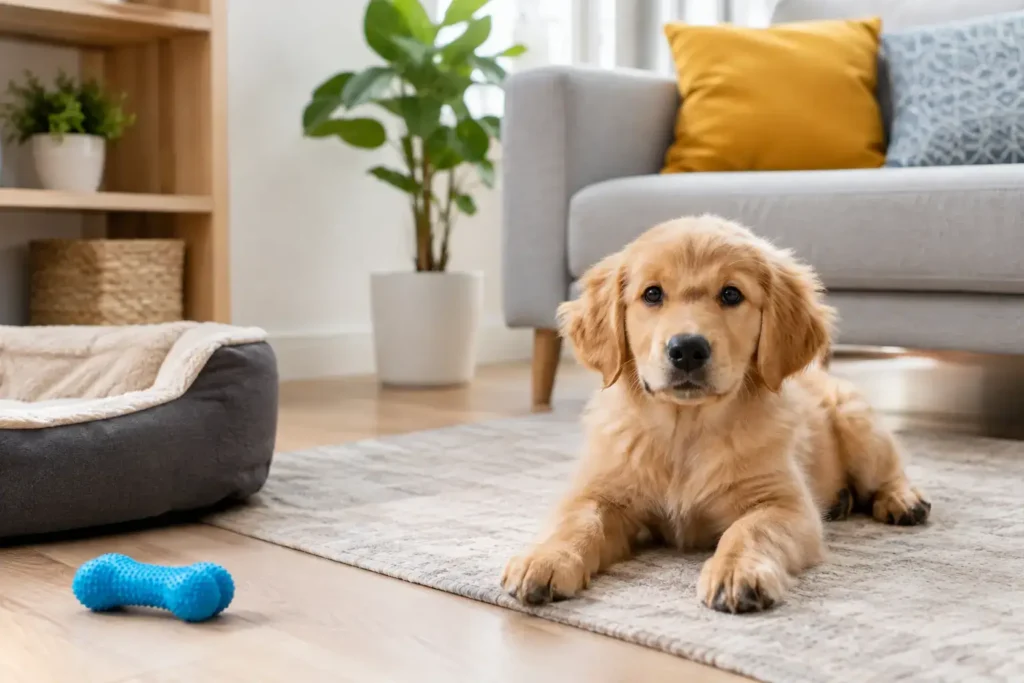
A puppy does not see an apartment the way you do. A charging cable looks like a chew toy, the gap behind the sofa feels like an adventure, and one forgotten sock can become an expensive veterinary concern. Learning how to puppy proof an apartment before your puppy arrives gives your new family member a safer place to settle in and gives you more time to enjoy those first happy days together.
Apartment puppy proofing is not about making your home look like a kennel. It is about creating a simple, secure setup where your puppy can rest, play, learn, and grow without constant access to trouble. Start with the areas your puppy will use most, then make adjustments as you learn their habits, size, and energy level.
How to Puppy Proof an Apartment Room by Room
The easiest way to prepare is to get down to puppy level. Sit on the floor and look around each room. Anything within reach can be chewed, pulled over, swallowed, or knocked down. Puppies are curious, fast, and not yet aware of danger, especially during teething.
Secure cords, outlets, and small electronics
Phone chargers, laptop cables, extension cords, and headphones are common chewing targets. Keep cords off the floor when possible, use protective covers for cables that must remain accessible, and unplug items you are not using. A puppy can chew through a cord surprisingly quickly, so do not rely on verbal correction alone.
Move small electronics, remote controls, batteries, and earbuds into drawers or closed containers. Batteries deserve special attention because swallowing one requires urgent veterinary care. If you work from home, create a cord-free puppy area near your desk rather than expecting your puppy to ignore tempting wires all day.
Keep floors clear and storage closed
Apartments can feel compact, which makes clutter easier for a puppy to reach. Shoes, laundry, children’s toys, coins, hair ties, socks, and plastic packaging should be picked up daily. Even well-behaved puppies can swallow fabric or small objects during a brief unsupervised moment.
Use closed bins for laundry and trash, preferably with secure lids. Place handbags, backpacks, and shopping bags above floor level. These often contain gum, medication, cosmetics, snacks, or other items that are unsafe for dogs.
Put household chemicals out of reach
Store cleaning sprays, detergent pods, bleach, pest-control products, and air fresheners in a high cabinet or a cabinet fitted with a childproof latch. Do the same with medication, vitamins, nicotine products, and essential oils. Natural does not always mean pet-safe.
Be careful after cleaning floors or bathrooms. Give surfaces time to dry and keep your puppy away from recently treated areas. If you use a robot vacuum, check its brushes and collection bin often so your puppy does not find and chew something it picked up.
Make the Kitchen and Bathroom Off-Limits at First
These rooms contain many risks in a small space. A closed door is often the most reliable solution while your puppy is young. If your apartment layout makes that difficult, use a sturdy pet gate where appropriate and supervise closely.
In the kitchen, keep food off counters and never leave a puppy alone near an open dishwasher, oven, or trash can. Chocolate, grapes, onions, garlic, xylitol-containing gum, cooked bones, and alcohol can all be dangerous. Secure the garbage even if it only contains food wrappers, since wrappers themselves can cause a blockage.
Bathrooms need the same care. Keep toilet lids closed, remove razors and toiletries from low shelves, and store medications securely. Puppies may drink from the toilet or chew a tube of toothpaste before you notice. A bathroom door that stays closed is simple prevention.
Check Windows, Balconies, and Entryways
High-rise and apartment living adds safety concerns that a landed home may not have. Windows and balconies need more than a quick visual check. A small puppy can slip through railings, climb furniture near a window, or become frightened by traffic, wind, and unfamiliar sounds.
Do not leave a puppy unattended on a balcony, even if the railing looks secure. Measure gaps in rails and inspect screens, which are not designed to hold a dog’s weight. Move chairs, tables, planters, and storage boxes away from railings so they cannot become climbing aids. If your puppy enjoys fresh air, supervised balcony time on leash is the safer choice.
At the front door, make a habit of checking where your puppy is before opening it. Apartment hallways bring new sounds, neighbors, deliveries, and open doors. A puppy who bolts into a corridor can quickly become scared or lost. Use a baby gate, exercise pen, or leash during busy arrival times until your puppy learns door manners.
Create a Safe Puppy Zone
You do not need to give a young puppy access to every room immediately. In fact, too much freedom often leads to accidents, chewing, and stress. A well-prepared puppy zone lets your dog relax while you cook, shower, work, or step into another room.
Choose an easy-to-clean area away from the front door and balcony. Include a properly sized crate or pen, a comfortable bed, fresh water, age-appropriate chew toys, and a safe surface underfoot. Avoid leaving soft toys with loose pieces, ropes that fray easily, or anything small enough to swallow.
A crate should feel like a quiet resting place, never a punishment. Some puppies settle well in a crate overnight, while others do better with a pen attached for a little more movement. It depends on your puppy’s age, confidence, toilet-training progress, and routine. Start gradually and make the space positive with calm praise and suitable treats.
Protect Furniture Without Expecting Perfection
Teething is normal, and puppies do not understand the difference between a chew toy and a table leg. Protect furniture by limiting access when you cannot supervise and offering better options every day. Rotate a few safe chew toys so they stay interesting, rather than leaving every toy out at once.
Use washable throws on sofas if you are concerned about fur, muddy paws, or early toilet-training accidents. Keep houseplants up high until you confirm they are pet-safe. Many common decorative plants can cause stomach upset or worse if chewed.
Avoid scolding a puppy long after you find damage. They will not connect the reaction to something they did earlier. Instead, calmly remove the item, redirect them to an appropriate chew toy, and review what allowed access in the first place. Good puppy proofing changes the environment before a mistake happens.
Plan for Potty Training in an Apartment
Potty training can take more planning in an apartment because the outdoor area is not right outside your door. Decide early whether your puppy will toilet outdoors, use an indoor pad temporarily, or follow a combination approach. Consistency matters more than the method you choose.
Take your puppy out after waking up, eating, drinking, playing, and napping. Young puppies have small bladders, so frequent trips are normal. Keep a leash, waste bags, and your keys in one easy-to-reach place near the door. This small setup prevents delays when your puppy suddenly needs to go.
If you use training pads, place them in one consistent spot away from food and bedding. The trade-off is that some puppies need extra time to transition from pads to outdoor toileting. Families in tall buildings or homes with limited outdoor access may still find them useful during the early weeks.
Prepare for Sounds, Neighbors, and Alone Time
Apartment puppies hear elevators, doors closing, footsteps, traffic, and other dogs more often than puppies in quieter homes. Introduce these sounds calmly. Play, reward, and rest near normal household noise instead of rushing to comfort every sound your puppy notices. Your relaxed response helps teach them that daily apartment activity is not a threat.
Be considerate of neighbors by starting alone-time training early. Begin with very short, successful periods in the puppy zone, then gradually increase the time. A puppy left alone for too long may bark, panic, or chew. Building confidence slowly is kinder to your puppy and more respectful of the people around you.
Before bringing home a puppy, review your lease or building rules for pet size limits, breed restrictions, elevator requirements, and designated relief areas. It is better to know these details before your puppy arrives than to manage an unexpected problem later.
A safe apartment does not have to be perfect on day one. Your puppy will show you what needs attention, whether that is a cabinet latch, a better gate, or one more cord cover. With a calm setup, patient training, and reliable care guidance from a trusted pet specialist such as Pet Time, your apartment can become the secure little home where a new best friend truly belongs.