
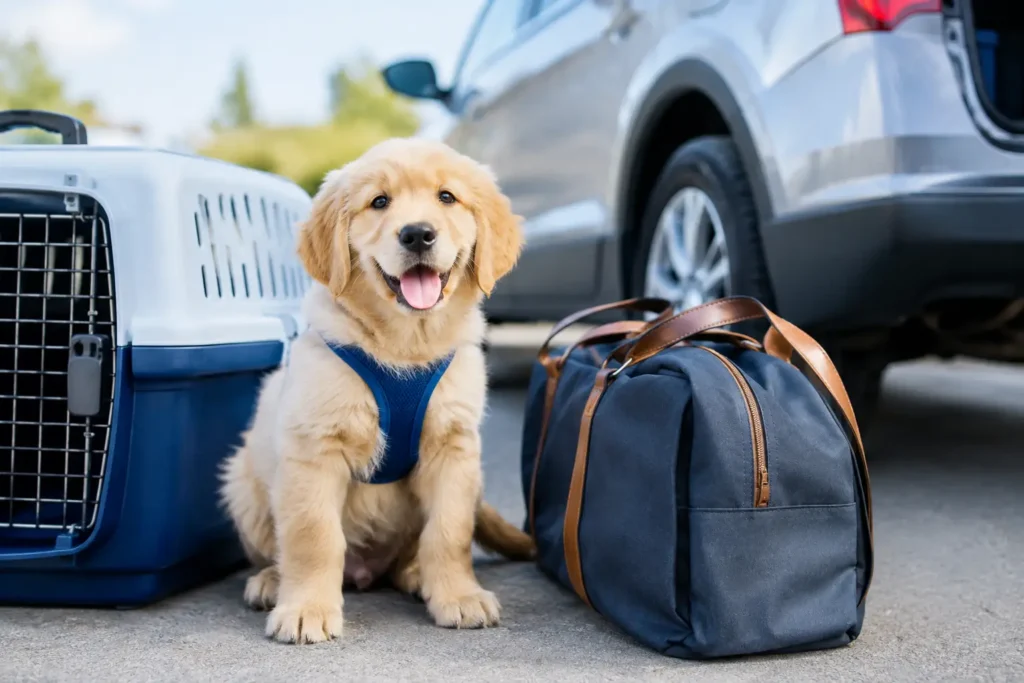
A puppy may look ready for an outing the moment they receive a vaccine, but protection does not happen the same day. So, can puppies travel after vaccination? Usually, yes for a careful, low-risk trip, but the safest timing depends on your puppy’s age, vaccine schedule, destination, and how they will travel.
For a new puppy going home with their family, a direct, comfortable car ride is very different from a long road trip, a crowded pet area, or air travel. The goal is not simply to get from one place to another. It is to protect a young puppy while their immune system is still learning to respond to vaccination.
Can Puppies Travel After Vaccination Safely?
Most puppies can take a short, private car journey after a vaccination appointment if they feel well and your veterinarian has not advised otherwise. Keep the ride calm, use a secure carrier or puppy car seat, and go straight to your destination. This is often how puppies travel home after joining a new family.
However, a vaccination is not an instant shield. It generally takes around one to two weeks for the body to build a meaningful immune response after a dose. Puppies also need a series of core vaccines because antibodies received from their mother can interfere with early vaccinations. That is why one vaccine appointment does not mean a puppy is fully protected.
Until your veterinarian confirms that the vaccine series is complete and immunity has had time to develop, avoid places where unfamiliar dogs may have been. Dog parks, shared pet relief areas, pet store floors, grooming facilities, and heavily used sidewalks can expose a puppy to viruses such as parvovirus. Parvo is especially concerning because it can survive in the environment and make young, unprotected puppies very sick.
The Difference Between Traveling and Public Exposure
Families often hear that puppies should not go out before they are fully vaccinated. The advice is well meant, but it needs context. Puppies benefit from safe socialization during their early developmental period. They need to experience gentle new sounds, people, surfaces, and routines. The key is controlling the risk.
A puppy can travel in your arms, in a clean carrier, or in a private vehicle without walking on public ground. You can introduce them to visitors who have healthy, vaccinated pets and who follow good hygiene. You can carry your puppy outside a cafe, let them hear traffic from a safe distance, or take them to a family member’s clean home.
What should wait is direct contact with unknown dogs, dog waste, communal water bowls, and areas used by many animals. Your veterinarian knows local disease risks and can give the clearest advice for your puppy’s individual schedule.
When Is a Puppy Ready for a Longer Trip?
A longer trip calls for more planning. Even a healthy, vaccinated puppy can become overwhelmed by motion, heat, noise, missed naps, or too many stops. If possible, give your puppy several days to settle into their new home before a nonessential journey. This helps you understand their eating habits, toilet routine, energy level, and response to car rides.
For road travel, many families feel most comfortable waiting until the puppy has had their final core vaccine dose and the waiting period recommended by their veterinarian has passed. The exact age varies, but final puppy vaccinations are often given at about 16 weeks of age. Some puppies need a different schedule based on their health history or veterinary advice.
If travel cannot wait, speak with your veterinarian before making arrangements. They may approve the trip while recommending stricter precautions, such as avoiding rest stops where dogs frequently relieve themselves and carrying your puppy instead of allowing them to walk in public areas.
Air Travel Requires Extra Checks
Air travel has another layer of rules. Airlines may require a health certificate, vaccination documentation, minimum-age compliance, and an approved carrier. Requirements can change by airline, route, and destination, so do not assume that a record accepted for one flight will be enough for another.
More importantly, not every puppy is a good candidate for flying. Very young puppies may struggle with stress, dehydration, or temperature changes. Flat-faced breeds, including French Bulldogs, may have additional breathing risks and may face airline restrictions. A veterinarian can help you decide whether flying is appropriate, while an airline can confirm its current paperwork and carrier requirements.
What to Bring When Traveling With a Puppy
Good preparation makes a short journey far easier for both puppy and owner. Bring your puppy’s vaccination record and any veterinary paperwork in a waterproof folder or saved clearly on your phone. If you are collecting a puppy from a trusted pet shop, ask for clear health and vaccination documentation before you leave.
Pack enough of your puppy’s usual food, fresh water, a small bowl, waste bags, cleaning wipes, a leash and harness, and a familiar blanket or toy. A sudden food change during travel can lead to an upset stomach, so stick to the diet your puppy already knows. For longer drives, plan quiet breaks in low-risk areas and never leave a puppy alone in a parked vehicle.
A well-ventilated carrier is usually the safest travel setup. It prevents a curious puppy from climbing under pedals, falling from a seat, or becoming frightened by sudden movement. Add bedding that smells familiar, but avoid loose items that could become tangled or be chewed apart during the ride.
Watch for Vaccine Reactions Before You Leave
Most puppies handle routine vaccinations well. They may be sleepy, mildly sore at the injection site, or less interested in play for a day. A quiet day at home is often the best choice after vaccination, especially for a very young puppy.
Call your veterinarian promptly if you notice facial swelling, hives, repeated vomiting, diarrhea, difficulty breathing, collapse, or extreme weakness after a vaccine. These signs are uncommon, but they need urgent attention. Do not start a long trip if your puppy seems unwell, even if the symptoms appear mild at first.
It is also wise to avoid sedating a puppy for travel unless a veterinarian specifically prescribes and explains it. Sedatives can affect balance, breathing, and body temperature, and they may not be suitable for every puppy or travel method.
A Simple Plan for Bringing a New Puppy Home
The journey home is often your puppy’s first big transition. Keep it peaceful. Have one person focus on driving and another, if possible, sit near the puppy. Keep the car cool, play low-volume music or no music at all, and resist the urge to introduce the puppy to everyone immediately after arrival.
Once home, take your puppy to their designated toilet area, then let them explore one small, puppy-proofed space. Offer water, allow rest, and keep the first day simple. Excitement is natural, but a calm start helps a puppy feel secure.
At Pet Time, families can ask for vaccination and health records before taking a puppy home, along with practical guidance on preparing for that first trip. A transparent record and clear next-step advice give new owners confidence from the very first ride.
Questions to Ask Your Veterinarian Before Travel
Before booking a longer journey, ask whether your puppy is protected enough for the planned destination, whether any additional vaccines or parasite prevention are needed, and when it is safe to use public walking areas. If you are crossing borders or flying, ask about health certificates, microchip requirements, rabies rules, and the timing of each document.
Your puppy’s age, breed, medical history, and travel plan all matter. A healthy 12-week-old puppy on a direct car ride may be fine with careful handling, while the same puppy may not be ready for a busy airport or a holiday involving many unknown dogs.
The best first trips are short, secure, and positive. Give your puppy time to grow into travel, follow your veterinarian’s schedule rather than rushing the process, and make every journey feel like a safe step toward life with their new family.