
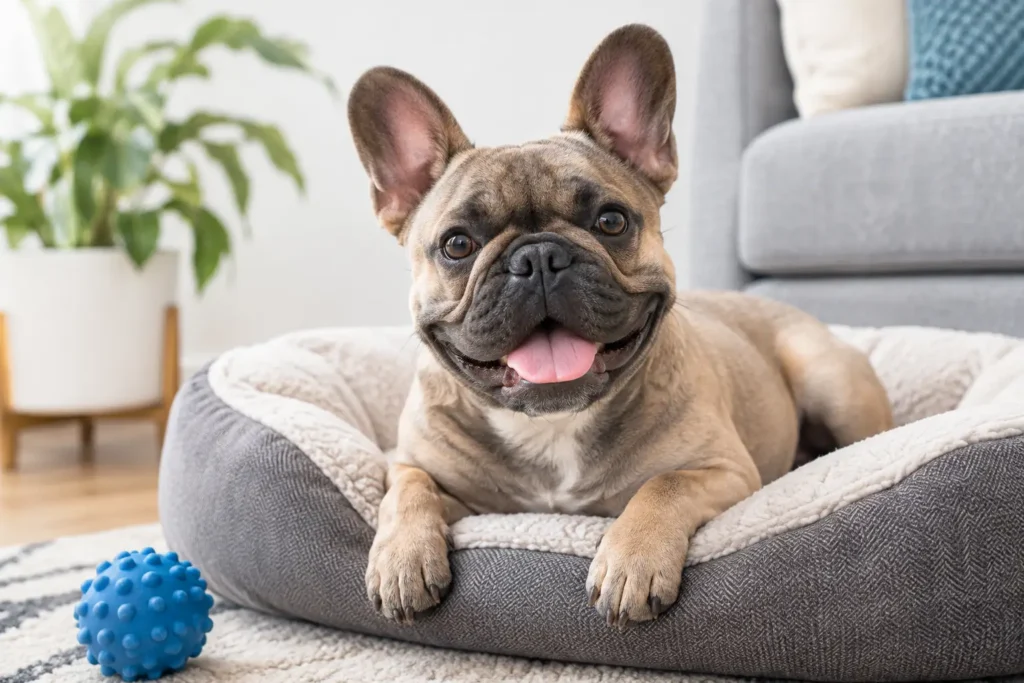
A Frenchie can turn a quiet living room into a comedy show with one head tilt, a determined little trot, and a nap in the most inconvenient spot. But their charming flat face and compact body also mean French Bulldogs need thoughtful daily care. This French Bulldog care guide helps new and future owners create a safe, comfortable routine from the first day home.
French Bulldogs are affectionate companion dogs that usually want to be close to their people. They can thrive in apartments and family homes, but they are not a low-effort breed. Their breathing, skin, body condition, and temperature need regular attention. The reward is a loving, entertaining dog that becomes part of the family very quickly.
Start With a Healthy, Settled Puppy
Good care begins before you bring your puppy home. Ask for clear vaccination and health records, learn what food your puppy is currently eating, and give them time to settle into their new environment. Sudden changes in diet, routines, and handling can upset a young puppy’s stomach or make them feel overwhelmed.
Prepare a calm sleeping area with a properly sized bed or crate, fresh water, safe chew toys, and a place away from heavy foot traffic. Frenchie puppies are curious and can be surprisingly determined, so puppy-proof low cabinets, loose wires, small objects, and balconies before arrival.
At Pet Time, families can view puppies in person and receive health documentation and practical care guidance before taking a new companion home. That reassurance matters, especially for first-time owners who want a healthy start and support after their puppy joins the family.
Feeding Your French Bulldog Well
French Bulldogs love food, and that is exactly why portion control matters. Their compact frame can carry extra weight quickly, putting more strain on their joints and making breathing harder. Choose a complete puppy food suitable for their age and follow the feeding guidance as a starting point, then adjust with your veterinarian based on growth, activity, and body condition.
Young puppies generally do best with several small meals each day. As they mature, most transition to fewer measured meals. Avoid leaving a full bowl out all day if your Frenchie tends to overeat. Fresh water should always be available, especially in warm weather.
Treats are useful for training, but small dogs do not need large treats. Use tiny pieces, reserve higher-value snacks for difficult training moments, and count treats as part of the day’s food intake. Human foods can be risky, so keep chocolate, grapes, raisins, onions, garlic, xylitol-containing products, cooked bones, and rich table scraps out of reach.
Watch for Food Sensitivities
Some French Bulldogs have sensitive skin or digestion. Occasional soft stool after a new treat may be minor, but repeated itching, ear irritation, vomiting, or diarrhea deserves a conversation with a veterinarian. Do not switch foods repeatedly without a plan. A gradual transition over several days is usually easier on the stomach and makes it clearer what is causing a reaction.
Heat Safety Is Not Optional
A French Bulldog should never be treated like a dog that can jog comfortably in midday heat. Their short muzzle can make it harder to cool themselves, and Malaysia’s hot, humid climate creates extra risk. Keep walks short and gentle during cooler morning or evening hours, provide indoor air-conditioned rest when possible, and always carry water.
Never leave a Frenchie in a parked car, even for a few minutes. A car can become dangerously hot very fast. At home, make sure your dog has a cool spot to rest and avoid energetic play during the hottest part of the day.
Heavy panting, noisy breathing that is worse than usual, weakness, drooling, vomiting, bright red or pale gums, confusion, or collapse can signal overheating. Move your dog to a cool area and contact a veterinarian urgently. Do not force water into their mouth or use ice-cold water, which can cause further stress.
Daily French Bulldog Care Guide: Skin, Ears, and Teeth
Frenchie care is often decided by small habits done consistently. Their facial folds can trap moisture, tears, and food debris. Gently check and clean the folds as needed with a pet-safe product or a soft damp cloth, then dry them thoroughly. Damp folds can lead to irritation, odor, or infection.
Check the ears weekly for redness, strong odor, excess wax, or frequent scratching. French Bulldogs often have upright ears, but that does not mean they are maintenance-free. Only use ear-cleaning products made for dogs, and do not push cotton swabs deep into the ear canal.
Dental care is equally valuable. Start handling your puppy’s mouth gently so tooth brushing becomes familiar rather than stressful. Regular brushing with dog-safe toothpaste is the best home habit for reducing plaque. Dental chews may help, but they do not replace brushing or professional veterinary checks.
Keep nails trimmed so they do not click excessively on the floor or change the way your dog walks. If nail trimming feels difficult, a groomer or veterinary team can help. It is better to ask for help than to create a fearful experience for your puppy.
Exercise Without Overdoing It
French Bulldogs need activity, but they do not need exhausting workouts. Short walks, gentle play indoors, sniffing games, and basic training sessions are often a better fit than long runs. A bored Frenchie may chew, bark, or become restless, while an overworked Frenchie may struggle to breathe.
Watch your own dog rather than following a fixed exercise target. Age, weather, weight, and breathing ability all matter. A young, healthy Frenchie may enjoy several short play sessions, while an older dog or one with breathing concerns may need a quieter routine.
Frenchies are not reliable swimmers. Their heavy front end and short legs can make water dangerous, even if they seem excited near a pool. Use close supervision and a properly fitted dog life jacket around pools, beaches, and boats. Never assume your dog can swim safely.
Training Builds a Confident Family Dog
Start training early with calm repetition and rewards. Focus first on their name, toilet routine, gentle handling, coming when called, walking on a leash, and settling in a designated area. Keep sessions brief. A few successful minutes are more productive than a long session that ends in frustration.
Socialization is not about placing your puppy in every busy situation. It is about creating positive, controlled experiences with friendly people, calm vaccinated dogs, household sounds, car rides, and grooming. Give your puppy space to observe. Forcing interaction can make a nervous dog more worried.
Consistency matters across the household. If one person allows jumping on guests and another scolds it, your Frenchie receives mixed signals. Agree on simple rules, use the same cues, and reward the behavior you want to see.
Know When Your Frenchie Needs a Vet
Routine veterinary visits, vaccines, parasite prevention, and health checks are central to a long, comfortable life. French Bulldogs can be prone to breathing issues, skin problems, allergies, eye concerns, spinal conditions, and joint issues. That does not mean every Frenchie will experience these problems, but it does mean early attention is wise.
Contact a veterinarian promptly if you notice persistent coughing, gagging, breathing changes, reduced appetite, repeated vomiting, diarrhea, limping, eye discharge, painful skin, or a sudden change in energy. Trust your instincts. You know when your dog is not acting like themselves.
Pet insurance or a dedicated emergency fund can also be worth considering. Frenchies can have unexpected medical needs, and planning ahead helps families make decisions based on care rather than financial pressure.
A Home Routine Your Frenchie Can Trust
The best French Bulldog homes are not perfect. They are predictable, cool, kind, and attentive. Your dog needs measured meals, clean water, gentle exercise, regular grooming, patient training, and time close to the people they love.
As your Frenchie grows, keep learning their individual signals: the playful bark, the tired sigh, the way they ask for a walk, and the small changes that may mean they need help. That everyday attention is what turns puppy care into a long, happy life together.