
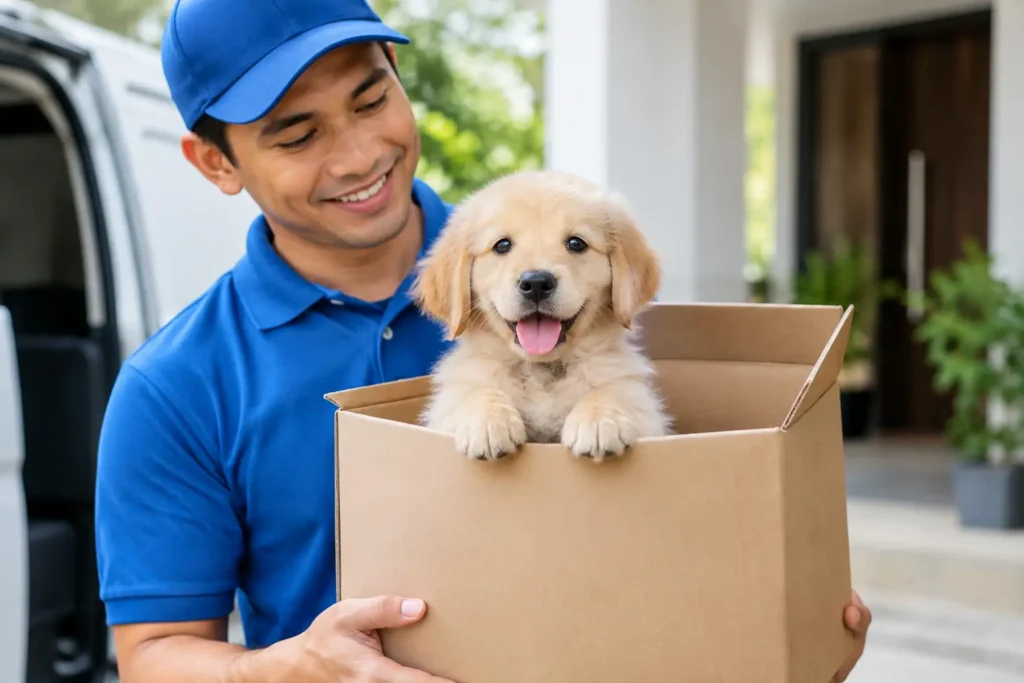
A new puppy should arrive at your door with more than an adorable face and a wagging tail. You should know where the puppy came from, what health care it has received, and how it was transported. So, can puppies be delivered? Yes, responsible door-to-door puppy delivery is possible across West Malaysia when it is arranged with the puppy’s comfort, safety, and health as the priority.
For many families, delivery makes bringing home a puppy easier, especially when work schedules, young children, distance, or traffic make a showroom visit difficult. But convenience should never mean guessing. A trustworthy pet shop should be ready to answer clear questions, provide documentation, and help you prepare before your new companion arrives.
Can Puppies Be Delivered Safely?
Puppies can be delivered safely when the journey is planned properly. The puppy needs suitable transport, fresh air, protection from excessive heat, a secure carrier or space, and a calm handover at the destination. Delivery should be treated as part of the puppy’s care, not simply as a courier service.
The right arrangement depends on the puppy’s age, breed, temperament, and travel distance. A small Maltese or Chihuahua may need extra warmth and reassurance, while an active Corgi, Beagle, or Golden Retriever puppy needs secure space and breaks that suit its age. Flat-faced breeds such as French Bulldogs and Pomeranians can be more sensitive to heat and stress, so careful transport planning matters even more.
For families in Puchong, Kuala Lumpur, Selangor, Klang Valley, and other locations across West Malaysia, door-to-door delivery can save time while still allowing you to welcome your puppy in a familiar home setting. If you are able to visit the showroom before reserving, that is often helpful. You can meet the puppy, ask questions in person, and choose supplies before delivery day. If a visit is not practical, ask for current photos, videos, and a clear explanation of the puppy’s health and care status.
What to Confirm Before Puppy Delivery
A healthy puppy is the first priority. Before agreeing to delivery, ask what veterinary checks have been completed and which vaccinations or preventive treatments the puppy has received. You should receive the puppy’s health and vaccination records at handover. These documents help your own veterinarian understand the puppy’s early care and help you keep future appointments on schedule.
It is also reasonable to ask about the puppy’s current food, daily routine, and temperament. Sudden changes can be stressful during the first few days at home. Knowing what food the puppy is used to, when it normally eats, and whether it is more playful or shy helps you create a gentler transition.
A responsible seller should be transparent about the breed, age, available records, and what is included with the puppy. Be careful if someone pressures you to make a fast payment, refuses to share recent information, offers no health documentation, or will not answer basic questions about the puppy’s background. A low price is not a good deal if it comes with uncertainty about health or welfare.
Before delivery is scheduled, confirm the delivery window, contact person, address, and any access details such as apartment security, parking, or elevator arrangements. A smooth handover keeps the journey shorter and calmer for the puppy.
Questions worth asking
You do not need a complicated checklist. Ask whether the puppy has had a veterinary health check, what vaccinations are recorded, what food it currently eats, how long the journey will take, and what you should prepare at home. You can also ask whether there is support available after the puppy arrives, particularly if you are a first-time owner.
At Pet Time, families can discuss their preferred breed, care needs, documentation, and delivery arrangements before bringing a puppy home. That conversation is valuable because every household is different. A busy couple in a condo may need a different setup from a family with a garden and school-age children.
Prepare Your Home Before the Puppy Arrives
Do not wait until the delivery vehicle is outside to decide where your puppy will sleep. Set up a quiet, comfortable area away from direct sunlight, loud television sounds, and heavy foot traffic. A crate or playpen, soft bedding, clean water bowl, puppy food, and a few safe toys are enough for the first day. The goal is comfort, not a room full of new objects.
Puppy-proof the space before arrival. Move electrical cables, cleaning chemicals, medications, small items, and foods that dogs should not eat. Check gaps behind furniture and balconies or gates where a small puppy could get stuck or slip through. If children are excited, explain that the puppy needs gentle voices and plenty of rest.
The first day can feel like a big family event, but a quiet welcome is usually kinder. Let the puppy sniff around its designated space at its own pace. Offer water, show it where to rest, and allow short toilet breaks. Some puppies eat less on their first day because they are adjusting. That can be normal, but keep an eye on energy levels, drinking, and general behavior.
What Happens at Door-to-Door Delivery?
At handover, take a few minutes to inspect the puppy calmly. The puppy should appear alert for its age, clean, and comfortable. You may notice a little nervousness after travel, which is understandable, but the puppy should not look severely distressed or unwell.
Review the health and vaccination records before the delivery team leaves. Make sure you understand the feeding routine and any care instructions provided. If you have purchased a starter set of supplies, check that you have the correct food, grooming items, leash, bedding, or cage arrangement for your puppy’s size.
Avoid immediately inviting every relative and neighbor to meet the puppy. Give your new pet time to settle, especially after a longer trip. Let introductions happen gradually over the next few days. This helps your puppy associate its new home with safety rather than noise and pressure.
Delivery Is Convenient, but Care Starts at Home
Door-to-door delivery solves the travel part of bringing home a puppy. It does not replace the daily commitment that follows. Puppies need regular feeding, toilet training, gentle socialization, grooming, play, vaccinations, and veterinary care. They also need patience while they learn household rules.
First-time owners should arrange a veterinary visit soon after arrival, even when the puppy has already received a health check. Your veterinarian can assess the puppy in its new environment, advise on the next vaccine dates, discuss parasite prevention, and answer breed-specific questions. This is especially useful for families deciding on feeding amounts, exercise, grooming, or crate training.
Think carefully about whether delivery day is the right day to bring home a puppy. If you will be traveling the next morning, hosting a noisy gathering, or facing a long day away from home, it may be better to choose another date. The best delivery date is one when someone can be present, calm, and ready to begin building trust.
A puppy delivered with proper care can be a wonderful beginning for your family. Prepare the space, ask the right questions, keep the first day peaceful, and give your new companion the steady care it needs to feel at home.