
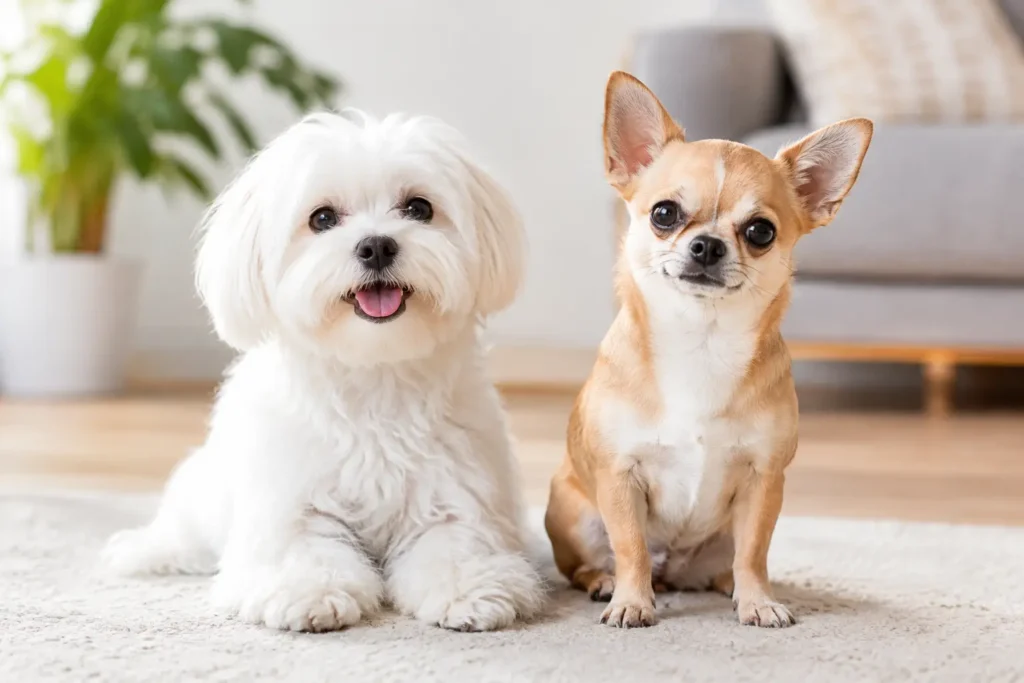
A tiny dog can fill a home with a surprisingly big personality. When comparing a Maltese vs Chihuahua, both breeds offer close companionship, manageable size, and plenty of charm. But they do not bring the same energy, grooming needs, or approach to strangers. The right choice depends on your household, schedule, experience with dogs, and what you want daily life with your puppy to feel like.
For families and pet lovers looking for a small puppy, it helps to look beyond a cute face. A well-matched breed is easier to train, more comfortable in your home, and more likely to become the affectionate companion you hoped for.
Maltese vs Chihuahua at a Glance
The Maltese is known for its soft white coat, gentle expression, and people-focused nature. Most adult Maltese weigh under 7 pounds. They are companion dogs through and through, often happiest when they are close to their person, relaxing on a lap, or following the family from room to room.
Chihuahuas are also very small, usually weighing up to 6 pounds, but their personalities can feel much bigger. They are alert, lively, and often deeply devoted to one or two people. A Chihuahua may be playful and cuddly at home while remaining cautious around visitors or unfamiliar dogs.
Neither breed needs a large house or yard to be happy. Both can do well in apartments and urban homes when they receive regular walks, indoor play, and attention. Because they are delicate toy breeds, however, both need careful handling, especially around young children.
Temperament and Family Fit
A Maltese is often the easier choice for owners who want a sweet, sociable dog with a softer temperament. Many Maltese enjoy meeting new people when introduced calmly. They are affectionate, cheerful, and usually eager to stay involved in family life. Their friendly nature can make them a lovely option for couples, older children, and first-time owners who can give them companionship and gentle guidance.
A Chihuahua can be equally loving, but this breed tends to be more watchful and opinionated. Many are excellent little alarm systems and may bark when someone approaches the door or enters the home. Early socialization matters greatly. A Chihuahua that regularly experiences kind people, safe outings, different sounds, and gentle handling as a puppy is more likely to grow into a confident adult.
For homes with toddlers, either breed requires adult supervision. Their small bones can be injured if a child accidentally drops, squeezes, or steps on them. Families with calm, dog-savvy older children may find either breed rewarding. If you want a dog that is generally more open to a busy household, the Maltese may have an edge. If you prefer a devoted little companion with a bold streak, a Chihuahua may feel like the better match.
Grooming: The Biggest Practical Difference
Grooming is where many future owners notice the clearest difference. A Maltese has long, silky hair rather than a typical shedding coat. This can be helpful for people who prefer less loose fur around the home, but low shedding does not mean low maintenance. A long-coated Maltese needs frequent brushing to prevent tangles and mats, particularly around the ears, legs, belly, and collar area.
Many owners choose a shorter puppy cut for easier upkeep. Even with a short trim, expect regular brushing, bathing, eye-area cleaning, nail trims, and professional grooming appointments. White coats can also show tear staining, so gentle, consistent face care is part of normal Maltese ownership.
Chihuahuas come in smooth-coat and long-coat varieties. Smooth-coat Chihuahuas are usually simpler to groom, needing a weekly brush and occasional bath. Long-coat Chihuahuas need more brushing, but generally not as much coat care as a long-haired Maltese. Both Chihuahua coat types shed, often more than first-time owners expect from such a small dog.
Choose a Maltese if you enjoy coat care or are comfortable budgeting for professional grooming. Choose a smooth-coat Chihuahua if you want the more straightforward grooming routine, while remembering that regular shedding is part of the trade-off.
Exercise and Everyday Energy
Both dogs have modest exercise needs, but they should not be treated like living accessories. A short daily walk, playtime indoors, and basic training sessions help keep them fit and mentally content.
Maltese puppies are playful without usually being overwhelming. They often enjoy a few short bursts of activity followed by plenty of cuddle time. They can be a good fit for owners who work from home, retirees, or families that want a small dog that is active enough for fun but not demanding for hours of exercise.
Chihuahuas can be more energetic, quick, and curious. Their small size does not reduce their need for stimulation. Puzzle toys, gentle games, and short walks are useful for preventing boredom. Some Chihuahuas become noisy or restless when they do not get enough attention, routine, or training.
Hot weather deserves extra care with both breeds. Small dogs can dehydrate quickly, and their paws can be sensitive on hot pavement. Keep walks shorter during very warm parts of the day, provide fresh water, and never leave a puppy in a parked car.
Training and Socialization
Both breeds are intelligent, but small dogs are sometimes allowed to get away with habits that would be corrected in a larger dog. Jumping from furniture, guarding a lap, barking at every sound, or refusing a leash can become harder to manage over time. Start gentle boundaries from the first day home.
Maltese often respond well to praise, treats, and short, cheerful training sessions. They can be sensitive, so harsh correction is not helpful. House-training may take patience because toy-breed puppies have small bladders. Consistent meal times, frequent outdoor breaks, and calm praise for success make a real difference.
Chihuahuas are smart and capable learners, but they may test limits or become defensive if frightened. Reward-based training builds trust. Socialization should never mean forcing a puppy to greet everyone. Instead, let your Chihuahua observe new people and places at a comfortable distance, then reward calm behavior.
For either breed, focus early on name recognition, recall, leash comfort, handling of paws and ears, and polite greetings. A puppy that learns these basics is easier to groom, travel with, and welcome into daily family life.
Health and Care Considerations
Healthy breeding and proper early care matter more than choosing a breed based on appearance alone. Maltese and Chihuahuas can be long-lived companions, but both are toy breeds with specific needs. Dental care is especially important because small mouths can become crowded, increasing the risk of plaque and gum disease. Regular tooth brushing and veterinary dental advice should be part of the plan.
They can also be prone to luxating patella, a kneecap issue seen in many small breeds. Avoid encouraging repeated jumps from beds, sofas, or high surfaces. Puppy stairs or ramps can be useful as your dog grows. Chihuahuas may be sensitive to cold because of their small bodies, while Maltese also benefit from warmth in air-conditioned rooms or cooler weather.
When bringing home a puppy, ask for clear vaccination and health records, learn what food the puppy is currently eating, and schedule a veterinary visit soon after arrival. A responsible pet shop should be transparent about the puppy’s care and ready to answer practical questions before and after you take your new companion home.
Which Breed Should You Choose?
A Maltese may suit you best if you want a gentle, affectionate companion, do not mind regular grooming, and prefer a dog that often welcomes family attention. A Chihuahua may suit you best if you appreciate a spirited, loyal little dog, want a lower-maintenance coat option, and are prepared to prioritize socialization and barking control.
There is no universally better breed in the Maltese vs Chihuahua decision. The best puppy is the one whose needs fit your real routine, not your idealized one. At Pet Time, families can ask about each puppy’s temperament, health checks, vaccination records, and care needs before making a decision. Take your time, meet the puppy when possible, and choose the small companion you are ready to love and care for every day.