
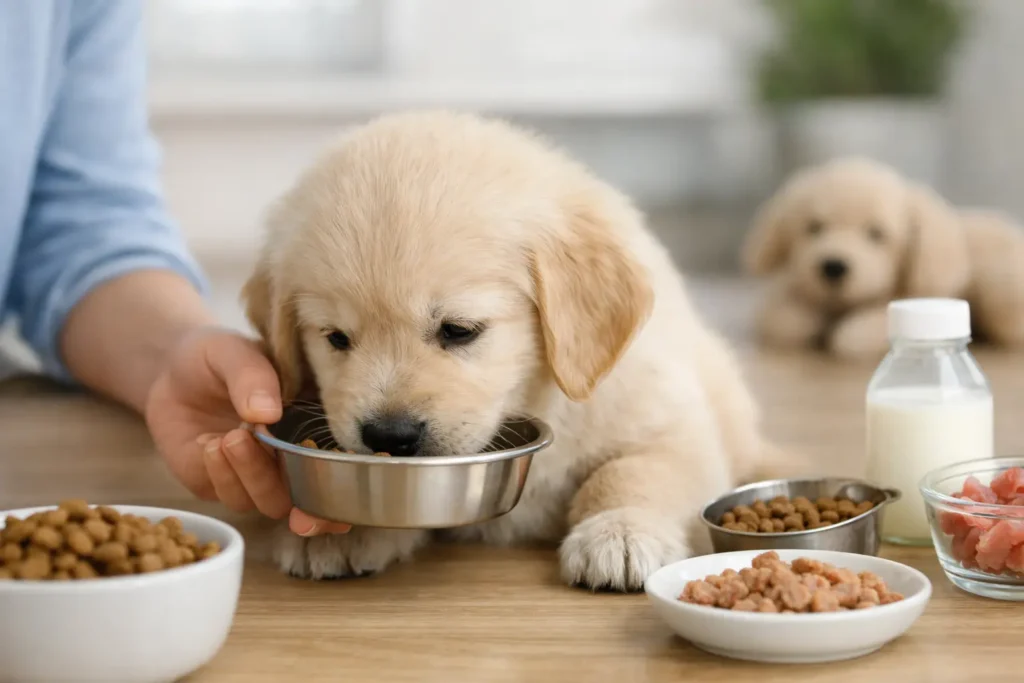
The first few days with a puppy can feel like a blur of cuddles, toilet breaks, naps, and questions. Feeding is one of the biggest ones. This new puppy feeding guide gives first-time owners a simple, safe routine to follow, so your puppy has the nutrition and consistency needed to grow, play, and settle comfortably into family life.
A healthy puppy does not need a complicated menu. They need a complete puppy food, measured meals, clean water, and adults who pay attention to changes in appetite, stool, energy, and weight. Start steadily, make changes slowly, and call a veterinarian when something does not seem right.
Start With the Food Your Puppy Already Knows
When you bring a puppy home, ask what food they have been eating and how often they are fed. A new home is already a major adjustment. Changing food on the same day can add unnecessary stress to a sensitive stomach.
Keep your puppy on the familiar food for several days if possible. If you would like to move to a different puppy formula, do it gradually over about seven to 10 days. Mix a small amount of the new food into the current food at first, then increase the new food a little each day. If your puppy develops persistent loose stool, vomiting, or refuses meals, pause the change and speak with a veterinarian.
Choose a food labeled as complete and balanced for puppy growth. Puppies need more energy and carefully balanced nutrients than adult dogs because their bones, muscles, brain, and immune system are still developing. Adult dog food may look similar on the shelf, but it is not designed to support this fast stage of growth.
For a large-breed puppy, choose a formula made for large-breed growth when your veterinarian recommends it. Breeds that will become larger dogs have different needs around calorie and mineral balance. Small companion breeds also need close attention because they have tiny stomachs and can become low in energy if meals are skipped.
New Puppy Feeding Guide by Age
Your puppy’s age matters more than a one-size-fits-all scoop size. The feeding chart on the food bag is a useful starting point, but it is not a rule. A puppy’s breed, expected adult size, activity level, body condition, and the calorie density of the food all affect the right amount.
Eight to 12 weeks: small meals, regular rhythm
Most puppies joining a new family are eating three to four small meals a day. Divide their total daily portion evenly rather than filling the bowl whenever it is empty. Set meal times help you monitor appetite and make toilet training more predictable.
For example, meals can be offered in the morning, around midday, late afternoon, and early evening. Give your puppy 15 to 20 minutes to eat, then remove the bowl. Fresh water should remain available throughout the day unless your veterinarian gives different advice.
Very young toy and small-breed puppies may need more frequent feeding. They can be more vulnerable to low blood sugar, especially if they are stressed, unwell, very active, or refusing food. Weakness, shaking, unusual sleepiness, wobbliness, or collapse needs urgent veterinary attention.
Three to six months: three meals are usually enough
As your puppy grows, three measured meals each day often work well. Their appetite may seem enormous during a growth spurt, then ease again. This is normal, but avoid responding by free-feeding all day. Overfeeding can lead to excess weight, digestive upset, and unhealthy pressure on developing joints.
Use your hands and eyes as well as the scale. You should be able to feel your puppy’s ribs with light pressure, without the ribs looking sharply visible. From above, there should be a gentle waist behind the ribs. Puppies should grow steadily, not become round or thin.
Six months and older: move gradually toward two meals
Many puppies can transition to two meals a day around six months, though small breeds, large breeds, and individual puppies may need a different schedule. Keep the same gradual approach you would use for any food change. Your veterinarian can help confirm the right timing based on breed, weight, and development.
Some large breeds remain on puppy food longer than smaller breeds. Do not switch to adult food just because your puppy looks bigger. Ask at your puppy’s health check when the transition is appropriate.
How Much Should You Feed?
Begin with the daily amount suggested by your chosen puppy food manufacturer for your puppy’s current weight and age. Divide that amount by the number of meals you offer. Then review your puppy every week or two. Growing puppies often need portions adjusted more often than adult dogs.
Measure food with a proper measuring cup or kitchen scale. Guessing by eye can lead to large differences, especially with calorie-dense kibble. If several family members feed the puppy, write the daily allowance on a note or use a container that holds only that day’s portion. This prevents the classic problem of a puppy receiving “just a little more” from everyone in the house.
Treats count too. Training is essential in the first months, and food rewards can be very useful. Choose tiny training treats or reserve part of your puppy’s daily kibble for practice. Treats should stay small and limited so they do not replace balanced meals or quietly add too many calories.
Wet Food, Dry Food, and Home-Cooked Meals
Dry puppy food is convenient, easy to measure, and can support dental chewing habits, although it does not replace tooth brushing. Wet puppy food can be appealing for picky eaters and adds moisture. Either can be suitable when it is complete and balanced for puppy growth.
Some families use a combination of wet and dry food. That is fine, but measure both portions carefully. Feeding a full dry-food allowance plus a full wet-food allowance usually means overfeeding.
Home-cooked meals and raw diets need extra care. A meal that looks wholesome may still be missing essential nutrients, while raw foods can carry bacteria that affect puppies and people in the home. If you want to feed a home-prepared diet, work with a veterinarian or qualified veterinary nutrition professional rather than building a recipe from social media advice.
Foods and Habits to Avoid
Puppies are curious, and many will happily eat things that are not safe for them. Keep chocolate, grapes and raisins, onions, garlic, alcohol, caffeine, xylitol-containing products, cooked bones, and heavily seasoned table food out of reach. Human food can also create begging habits and upset a puppy’s stomach.
Avoid giving calcium supplements, vitamins, or other add-ons unless your veterinarian specifically recommends them. A complete puppy food already aims to provide balanced nutrition. Extra supplements can do more harm than good, particularly for growing bones.
Do not use milk as a regular drink after weaning. Most puppies do best with fresh water. If a puppy is not drinking, seems dehydrated, has diarrhea, or vomits repeatedly, contact a veterinarian promptly.
Make Mealtime Part of Good Puppy Care
Mealtime is more than nutrition. It is a daily chance to build calm habits and notice early health changes. Feed in a quiet area, away from busy feet and other pets that may crowd the bowl. If you have multiple dogs, separate them while they eat so you can see who is actually finishing their food.
A food puzzle or slow feeder can make meals more interesting for fast eaters, but choose one suitable for your puppy’s size and supervise at first. The goal is gentle enrichment, not frustration. For a puppy that guards food, freezes over the bowl, growls, or snaps, do not punish the behavior. Give them space and ask a qualified trainer or veterinarian for guidance early.
At Pet Time, families can ask for practical feeding guidance when preparing to bring home a health-checked puppy. Having the right food, bowls, treats, and a clear first-week routine ready before your puppy arrives makes the transition easier for everyone.
When Appetite Changes Need Attention
A puppy may occasionally eat less after an exciting day, a vaccination visit, or a move to a new home. Still, puppies can become unwell quickly. Contact a veterinarian if your puppy repeatedly skips meals, has ongoing diarrhea or vomiting, appears painful, becomes unusually quiet, or shows signs of dehydration.
Take note of what and how much your puppy ate, when symptoms began, and whether they may have swallowed an object or eaten unsafe food. This information helps your veterinary team respond faster.
Your puppy will not remember the exact brand on their first food bag, but they will benefit from the safety of a dependable routine. Offer measured meals, make changes patiently, and let every mealtime be one more quiet moment of trust between your family and your new best friend.