
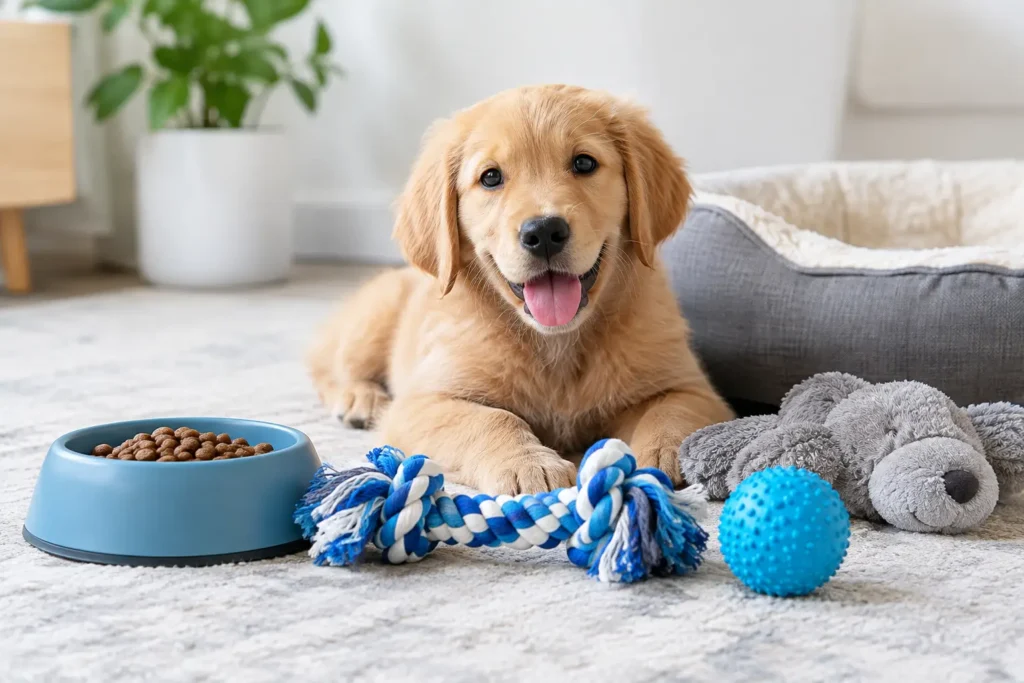
The first evening with a new puppy is exciting, messy, and usually a little tiring. A puppy may be leaving its mother, littermates, and familiar surroundings for the first time. The right pet supplies do more than fill a shopping bag – they help your new family member feel safe, eat well, rest comfortably, and begin learning the house routine.
For first-time owners, it is tempting to buy everything at once. A better approach is to start with the essentials, then add items based on your puppy’s size, coat type, energy level, and daily routine. A small Pomeranian, for example, needs different bedding and grooming tools than a Golden Retriever puppy. Buying with purpose saves space, avoids waste, and gives your puppy a calmer start.
Pet Supplies for Food, Water, and Daily Routine
Food is one of the first things to prepare before your puppy comes home. Start with a quality puppy food suited to your dog’s age and expected adult size. Puppies need a diet designed to support growth, but sudden food changes can upset a sensitive stomach. If your puppy is already eating a particular food, keep that routine at first and change gradually only when needed.
Choose sturdy food and water bowls that are easy to wash and difficult to tip. Stainless steel is a practical choice because it is durable, hygienic, and simple to clean. For flat-faced breeds such as French Bulldogs or Shih Tzus, a shallow bowl may be easier to use. Keep fresh water available throughout the day, especially in Malaysia’s warm weather.
A feeding mat is a small addition that makes a real difference. It catches splashes and kibble, protects your floor, and creates a consistent place for meals. Consistency helps puppies learn quickly. When meals, toilet breaks, naps, and playtime happen in a predictable rhythm, most puppies settle more easily.
Treats are useful too, but they should support training rather than replace proper meals. Pick small, puppy-safe treats and use tiny portions for rewarding calm behavior, toilet training, and simple cues such as sit and come. For young puppies, a few treats go a long way.
A Safe Place to Sleep and Settle
Every puppy needs a quiet resting area. A suitable cage or crate can provide a secure den-like space when introduced gently. It should be large enough for your puppy to stand, turn around, and lie down comfortably, but not so large that one end becomes a toilet area. Choose the size based on the puppy’s expected adult size, or use a divider for growing breeds.
A soft bed, washable blanket, or crate mat adds comfort. Look for materials that can handle frequent washing because accidents are normal during the first weeks. Puppies also chew, so avoid bedding with loose threads, exposed foam, or small decorative pieces that could be swallowed.
Where you place the bed matters as much as the bed itself. Put it in a calm part of the home where your puppy can still feel close to the family. A puppy left alone in a distant room may become anxious, while a bed placed in a noisy walkway can make proper rest difficult. Young dogs need plenty of sleep, often far more than new owners expect.
For toilet training, use puppy pads only if they fit your household plan. Pads can be helpful for high-rise homes, rainy days, or very young puppies that cannot yet hold their bladder for long. However, if your long-term goal is outdoor toileting, begin taking your puppy to the correct spot on a regular schedule. The key is not perfection on day one. It is calm repetition and quick cleanup without scolding.
Leashes, Collars, and Travel Essentials
A properly fitted collar or harness is a daily necessity. You should be able to slip two fingers between the collar and your puppy’s neck. Check the fit often because puppies grow quickly. Many owners prefer a harness for small breeds and puppies that pull, while others use a collar for identification and a harness for walks. What works best depends on your puppy’s build and comfort.
Add an ID tag with your contact details as soon as possible. Even indoor puppies can slip through an open door or become frightened in an unfamiliar place. A reliable leash, preferably lightweight at first, gives you control without overwhelming a small puppy.
A carrier or travel crate is another useful purchase, especially for veterinary visits, grooming appointments, and car travel. It should be secure, well ventilated, and appropriate for your puppy’s size. Never allow a puppy to roam freely in a moving vehicle. Safe travel protects your dog and everyone in the car.
Keep a simple travel kit ready with water, a collapsible bowl, waste bags, tissues, and a small towel. This is especially useful when collecting your puppy, traveling across West Malaysia, or visiting family. Convenience matters, but safety comes first.
Toys That Teach, Not Just Entertain
Puppies explore the world with their mouths. Chewing is normal, particularly during teething, but it can quickly turn into damaged slippers, furniture, and cables if your puppy has no appropriate outlet. Offer durable chew toys made for puppies, and select a size that cannot be swallowed.
Different toys serve different needs. Soft toys can offer comfort, rubber toys can help with chewing, and treat-dispensing toys can keep a puppy occupied during quiet time. Rotate toys instead of leaving every toy out at once. A toy that disappears for a few days often feels new again.
Avoid giving old household items such as socks or worn shoes as toys. Your puppy cannot understand why one shoe is allowed but another is not. It is also safer to supervise play, particularly with plush toys, ropes, or anything that could break apart.
Play is not only about using up energy. Short, positive play sessions build trust and create chances to teach gentle handling, bringing objects back, and settling after excitement. For active breeds such as Beagles, Corgis, and Golden Retrievers, mental stimulation is just as valuable as physical activity.
Grooming Pet Supplies for a Healthy Coat
Grooming starts at home long before a full salon appointment. The right brush helps remove loose hair, prevents tangles, and gives you a chance to check your puppy’s skin, ears, paws, and coat. Long-haired breeds such as Maltese, Poodles, Maltipoos, and Shih Tzus usually need more frequent brushing than short-haired breeds.
Choose puppy-safe shampoo rather than human shampoo, which can be too harsh for a dog’s skin. Bathing too often may dry out the coat, so frequency depends on your puppy’s lifestyle, coat, and how dirty they get. Between baths, regular brushing and wiping muddy paws can keep your puppy comfortable.
A basic grooming kit should include a suitable brush or comb, nail clippers or grinder, puppy shampoo, ear-cleaning products recommended for dogs, and a towel. Nail trimming can feel intimidating at first. If you are unsure, ask a groomer or veterinary professional to show you the safest method. It is better to learn slowly than risk cutting too close.
Dental care deserves attention early as well. Puppy-safe toothbrushes and toothpaste help make mouth handling familiar. Start with brief, gentle sessions. This can make future dental care much easier, particularly for smaller breeds that may be more prone to dental buildup.
Health, Cleaning, and the Supplies People Forget
Health records, vaccination information, and veterinary guidance are part of responsible puppy care, but practical home supplies matter too. Keep pet-safe cleaning products ready for accidents. Avoid harsh chemicals in areas your puppy may lick or walk through. Enzyme cleaners are often useful because they help remove the scent that can draw a puppy back to the same spot.
Waste bags, a scoop for outdoor areas, and washable covers for furniture or car seats can make daily life cleaner. A pet gate is also worth considering if you need to block stairs, kitchens, or rooms with electrical cords. Puppy-proofing is not glamorous, but it prevents many common accidents.
Pet Time helps new owners prepare with practical essentials alongside health-checked, vaccinated puppies. Before bringing any puppy home, ask what food they are eating, what grooming they need, and whether their breed has special care considerations. Clear answers and proper documentation give families more confidence from the beginning.
Your puppy does not need a house full of expensive accessories to feel loved. They need clean food and water, a safe place to rest, suitable toys, patient guidance, and people who show up every day. Start with the pet supplies that support those needs, then let your puppy’s personality guide the rest.