
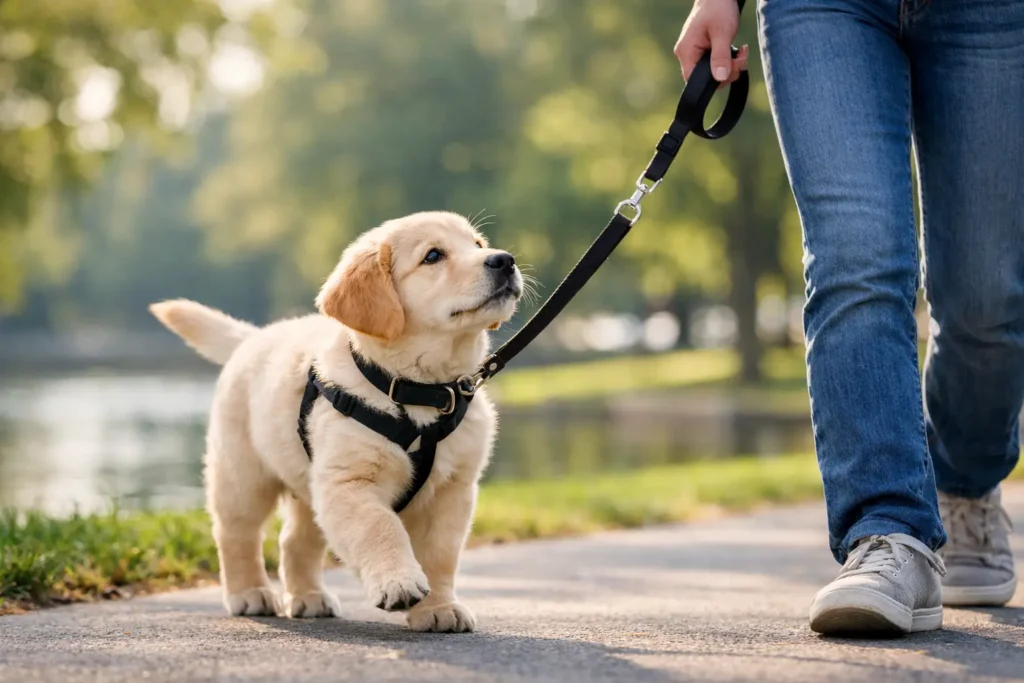
The first few walks with a new puppy can feel less like a peaceful outing and more like a game of stop, pull, sniff, and sit down. That is completely normal. These puppy leash training tips help new dog parents turn those early walks into a calm, safe routine without frightening or overwhelming their puppy.
A puppy is not born knowing that a leash means staying near you. The leash, collar, outdoor sounds, moving cars, unfamiliar people, and other dogs are all new. Training works best when you make each step short, positive, and easy enough for your puppy to succeed.
Start With the Right Leash Setup
Before asking your puppy to walk nicely, make sure the equipment feels comfortable. A lightweight flat collar or a well-fitted harness is usually a good starting point for young puppies. The fit matters: you should be able to slide two fingers between the collar or harness and your puppy’s body, but it should not be loose enough for them to slip out.
Choose a standard leash around 4 to 6 feet long. Retractable leashes can make it harder for a puppy to understand boundaries, and they offer less control near roads, bicycles, or excited dogs. A simple leash lets you guide your puppy gently while keeping them close and safe.
Some puppies do better with a harness, especially small companion breeds or puppies that pull against a collar. Others may find a harness unfamiliar at first. There is no single setup that suits every dog, so watch your puppy’s body language. If they freeze, scratch constantly, or seem uncomfortable, check the fit and introduce the gear more slowly.
Let Your Puppy Get Used to the Leash Indoors
The living room is often a better first training ground than a busy sidewalk. Put the collar or harness on for a few minutes while your puppy enjoys treats, playtime, or a meal. This creates a simple association: wearing the gear predicts good things.
Next, clip on the leash and let your puppy walk around indoors under close supervision. Do not pull them forward. Let them feel the light movement of the leash while you reward calm behavior. If they chew or tug at it, quietly redirect them with a toy or a treat rather than turning it into a struggle.
Once your puppy is comfortable, hold the leash and take a few steps together. Use a cheerful cue such as “let’s go,” then reward your puppy when they follow beside you. At this stage, even three or four good steps are worth praising.
Puppy Leash Training Tips That Build Good Habits
The goal is not to make your puppy walk in a perfect heel for an entire outing. The real goal is to teach them that keeping the leash loose and checking in with you makes the walk continue. That is a much easier lesson for a young dog to understand.
Reward the Position You Like
Keep small, soft treats in your pocket or treat pouch. When your puppy is near your side and the leash is loose, say “good” or use a marker word, then give a treat close to your leg. Delivering the treat in the right place helps your puppy learn where you want them to walk.
At first, reward often. A puppy may need a treat every few steps, especially outside where distractions are much more exciting. As they improve, gradually reward less frequently, but continue praising calm, loose-leash walking throughout their life.
Stop When Pulling Starts
When your puppy pulls ahead, resist the urge to pull back. Tugging can make some puppies pull harder, brace themselves, or become worried about the leash. Instead, stop moving. Wait quietly for even a small amount of slack in the leash, then praise and begin walking again.
If your puppy keeps pulling toward something interesting, take a few steps in the opposite direction or make a gentle turn. This teaches a clear pattern: a tight leash pauses the adventure, while a loose leash moves it forward. Consistency matters more than walking far.
Keep Sessions Short and Successful
A young puppy has a short attention span. Five to ten minutes of focused practice may be plenty at first, particularly after vaccinations are complete and your veterinarian has advised that it is safe to explore public areas. Several short sessions are usually more effective than one long walk that ends with everyone frustrated.
Choose quiet times and low-distraction routes in the beginning. A calm driveway, hallway, yard, or peaceful stretch of sidewalk gives your puppy room to learn. Gradually introduce busier areas, different surfaces, friendly people, and other dogs as their confidence grows.
Teach Your Puppy That the World Is Safe
Leash training is also a chance to build gentle social confidence. Your puppy may stop to watch a stroller, hear a truck, or notice another dog barking across the street. Give them time to look. Speak calmly, offer a treat, and create enough distance that they can stay relaxed.
Do not force greetings with strangers or dogs. Not every puppy wants to say hello, and not every dog you meet is a suitable playmate. A calm walk past a distraction is often more valuable than an excited greeting that turns into jumping, pulling, or fear.
If your puppy becomes overwhelmed, move farther away and keep the next outing easier. Signs of stress can include refusing treats, crouching, trying to run home, pulling hard in one direction, or freezing in place. This is not stubborn behavior. Your puppy is telling you that the situation is too difficult right now.
Common Leash Training Mistakes to Avoid
New owners often expect too much too soon. Puppies need time to understand that the leash is not a restriction or a signal to rush forward. Avoid correcting with harsh leash jerks, shouting, or punishment. These methods can make walks stressful and may damage the trust you are building together.
It also helps to avoid letting your puppy pull you to every interesting smell. Sniffing is healthy and mentally enriching, so you do not need to stop it. The difference is permission. Ask for a loose leash or a quick check-in first, then say a release cue such as “go sniff.” Your puppy learns that good manners still lead to enjoyable exploration.
Another common mistake is practicing only when you are in a hurry. If you need to get somewhere quickly, your puppy may receive mixed messages because pulling sometimes works. Set aside a few minutes specifically for training, when you can stop, turn, and reward without rushing.
What to Do If Your Puppy Bites the Leash or Refuses to Walk
Leash biting is common, especially in playful or teething puppies. Stay calm and avoid pulling the leash away, which can make it feel like a fun tug toy. Pause, keep your hands still, and offer a treat near your leg when your puppy releases it. Then move forward for a few steps and reward again.
A puppy that refuses to walk may be tired, uncertain, uncomfortable, or simply not ready for that environment. Check that their collar or harness fits properly and that the ground is not too hot, slippery, or frightening. Then go back to an easier location. Carrying a very young puppy home after a short, positive practice is better than dragging them through a stressful experience.
If refusal, limping, coughing, or clear discomfort continues, speak with your veterinarian. Health and comfort should always come before training goals.
Make Every Walk Part of Your Bond
The best puppy leash training tips are built around patience, not pressure. Your puppy will have days when they make wonderful progress and days when a blowing leaf is more interesting than anything you say. Keep your voice warm, your expectations realistic, and your sessions short enough to end on a good moment.
A healthy, well-prepared start makes new puppy ownership easier, from choosing the right leash and bedding to building everyday routines. Pet Time is always happy to support new dog parents with practical care guidance as their puppy settles into family life.
Your puppy does not need perfect walks right away. They need to learn that staying close to you feels safe, rewarding, and fun. With a little daily practice, those early stop-and-sniff outings can become one of the happiest parts of your day together.