
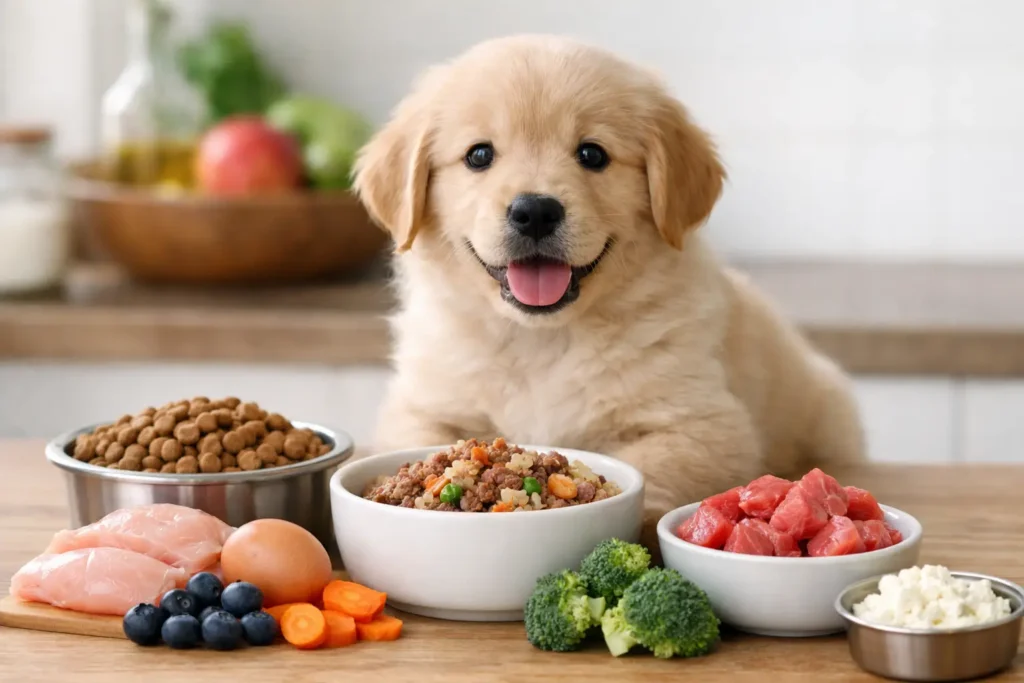
That first meal at home matters more than most new owners expect. A puppy that eats well usually settles better, has steadier energy, healthier digestion, and a stronger start to growth. If you are asking what food should puppies eat, the short answer is high-quality puppy food made for growth, fed in the right amount for age, size, and breed.
The longer answer is where many families get confused. Cute packaging, breed labels, homemade diet advice, and social media tips can make feeding feel more complicated than it needs to be. The good news is that most puppies do best on a simple, consistent plan.
What food should puppies eat for healthy growth?
Puppies are not just smaller dogs. Their bodies are building bone, muscle, organs, skin, and brain function at a fast pace, so they need more calories and a different nutrient balance than adult dogs. That is why puppy-specific food is usually the safest choice during the growth stage.
A good puppy food should provide balanced protein, fat, vitamins, and minerals, especially calcium and phosphorus in appropriate amounts. Too little nutrition can slow healthy development. Too much of the wrong thing can also cause problems, particularly in larger breeds that grow quickly.
For most families, the easiest and most reliable option is commercially prepared puppy kibble or wet food from a reputable brand. These diets are made to support growth and are easier to portion consistently. Dry food is convenient, stores well, and can help with chewing. Wet food can be helpful for very young puppies, picky eaters, or puppies transitioning into a new home, though it is usually more expensive to feed long term.
Some owners prefer a mixed approach, using kibble as the base and adding a small amount of wet food for taste. That can work well if portions are adjusted properly. The main goal is not variety for its own sake. It is nutritional balance and digestive stability.
How to choose the right puppy food
The best food for one puppy is not always the best for another. Breed size, age, activity level, and stomach sensitivity all matter. A tiny Chihuahua puppy and a Golden Retriever puppy do not grow at the same rate, and they should not always eat the same formula.
Small-breed puppies often need calorie-dense food in smaller bite sizes because they have faster metabolisms and small mouths. Large-breed puppies need controlled growth, which means food formulated to support bones and joints without pushing them to grow too fast. Medium breeds usually fall somewhere in between.
When reading labels, look for a puppy formula rather than an all-life-stages food if you want the most straightforward option. Puppy formulas are designed with growth in mind. You should also check that the food offers complete and balanced nutrition for puppies.
Ingredients matter, but context matters too. Many owners focus only on whether fresh meat appears first on the label. That is understandable, but a food is not judged by one ingredient alone. What matters more is the full nutritional profile, digestibility, and whether your puppy does well on it over time.
Signs a puppy food is working include firm stools, steady weight gain, a shiny coat, good energy, and an eager but not frantic appetite. If your puppy has frequent loose stool, vomiting, excessive gas, dull coat, or poor growth, the diet may need to be reviewed with a veterinarian.
How often should puppies eat?
Feeding schedule is just as important as food choice. Puppies do better with smaller, regular meals because their stomachs are small and their energy needs are high.
Very young puppies that have just come home often eat three to four meals a day, depending on age and size. As they grow, most can move to three meals a day, then eventually two meals a day as they approach adulthood. Toy breeds may need more frequent feeding earlier on because they can be more sensitive to drops in blood sugar.
A loose guide looks like this: younger puppies often need three to four meals daily, puppies around a few months older usually do well on three meals, and older puppies gradually shift to two meals. Exact timing depends on the individual puppy and your veterinarian’s advice.
Routine helps. Feeding at similar times each day can support digestion, toilet training, and general settling. Free-feeding, where food is left out all day, sounds convenient but often makes it harder to monitor appetite and portion control. Scheduled meals are usually a better fit for new owners.
How much should puppies eat?
This is where many loving owners accidentally overfeed. Puppies need enough food for growth, but overfeeding can lead to digestive upset, unhealthy weight gain, and extra strain on developing joints.
Start with the feeding guide on the food packaging, then adjust based on your puppy’s body condition, age, and growth pattern. Package guidelines are a starting point, not a perfect rule. Some puppies are more active, some are less active, and some breeds mature very differently.
You should be able to feel your puppy’s ribs under a light layer of tissue, but not see them sharply sticking out. If your puppy is becoming round through the waist or gaining weight too quickly, portions may need to come down. If your puppy seems thin, is not growing well, or always seems weak or unsettled, portions or food type may need review.
It also helps to measure meals with a proper scoop or cup rather than guessing. Small overfeeds done every day add up quickly.
Should puppies eat dry food, wet food, or homemade food?
There is no single format that suits every home. Dry puppy food is the most practical choice for many families because it is affordable, easy to store, and easy to measure. Wet food can be more appealing for picky puppies and may help with hydration, but it is usually costlier and less convenient once opened.
Homemade diets are where caution is needed. They can sound healthier because they feel fresh and personal, but homemade meals are very easy to get wrong. Puppies need precise nutrition during growth, and even well-meaning recipes from the internet may be unbalanced. If an owner wants to feed homemade food, it should be designed with veterinary guidance.
Raw feeding is another topic that gets strong opinions. Some owners support it, while others avoid it because of bacterial risk, handling concerns, and the difficulty of balancing nutrients for a growing puppy. For most first-time puppy owners, a complete commercial puppy diet is the safer and simpler choice.
Foods puppies should avoid
Knowing what not to feed matters just as much as knowing what to buy. Puppies should not be given chocolate, grapes, raisins, onions, garlic, cooked bones, alcohol, caffeine, or foods containing xylitol. These can be toxic or dangerous even in small amounts.
Fatty table scraps are also a bad habit to start. They may lead to diarrhea, vomiting, picky eating, or unhealthy weight gain. Puppies quickly learn to beg if people food becomes part of the routine.
Treats are fine in moderation, especially for training, but they should stay a small part of the daily intake. If you are doing frequent training sessions, reduce meal portions slightly so your puppy is not overeating overall.
When to switch from puppy food to adult food
Puppies should stay on puppy food until they are close to physical maturity, but the timing depends on breed size. Small breeds usually mature faster, while large breeds take longer. That means a tiny companion breed may be ready for adult food much earlier than a large retriever or working-type dog.
This is one of those areas where general advice helps, but individual guidance is better. If you are unsure, ask your veterinarian during a routine growth check. Switching too early may shortchange growth nutrition. Switching too late can encourage excess weight gain in some dogs.
When it is time to change, do it gradually over several days by mixing increasing amounts of the new food with the old. A sudden switch is a common cause of upset stomach.
What food should puppies eat when they first come home?
The first few days in a new home are not the best time for a dramatic diet change. Even a healthy puppy can have a sensitive stomach after travel, a new environment, and a different routine. If your puppy has already been eating a suitable puppy food, keeping that same food for the short term is often the smoothest option.
After your puppy settles in, you can transition to another puppy formula if needed. Just do it slowly. A gradual change over about a week tends to be easier on digestion than changing everything at once.
For families bringing home a new companion, this is one of the reasons support matters. At Pet Time, we always encourage owners to keep feeding simple in the beginning, monitor stools and appetite, and ask questions early if anything seems off. A little guidance at the start can prevent bigger feeding mistakes later.
Feeding a puppy well does not have to be fancy. Choose a balanced puppy food, feed it consistently, adjust as your puppy grows, and watch the dog in front of you rather than chasing every trend. A healthy appetite, steady growth, and a happy routine are usually the clearest signs that you are on the right track.