
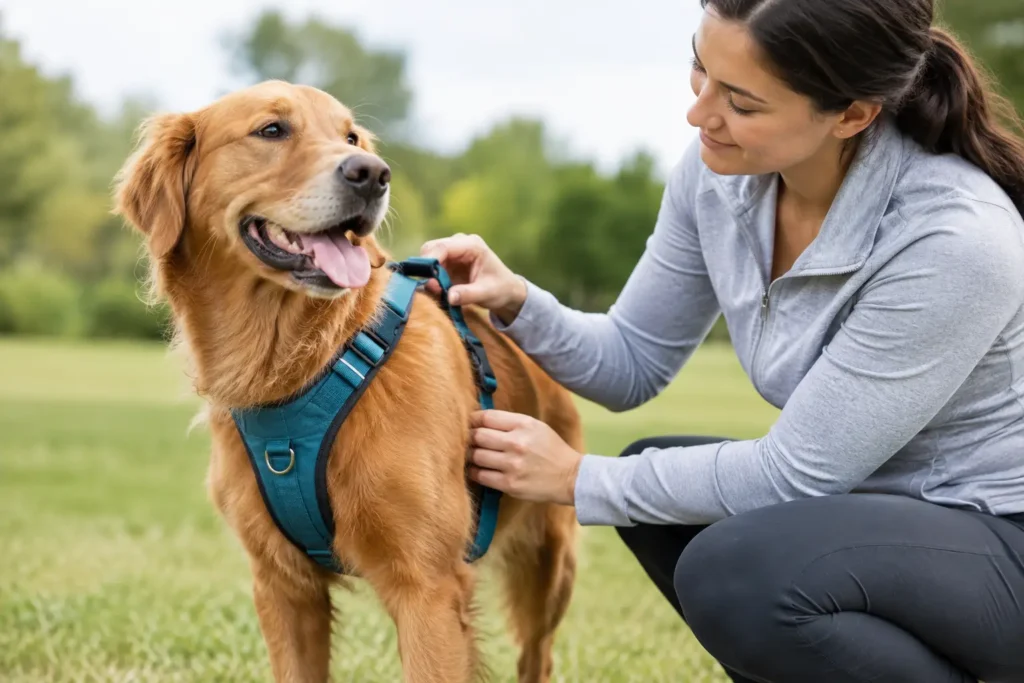
A harness that looks adorable on the shelf can still rub under your dog’s legs, shift during a walk, or make a nervous puppy feel trapped. The best dog harnesses do a simple but valuable job: they help you guide your dog comfortably while reducing pressure on the neck. For families bringing home a new puppy or updating an older dog’s walking gear, choosing the right one is part of building safe, happy routines together.
Why Dog Harnesses Are a Smart Everyday Choice
A traditional collar is useful for identification tags, but it is not always the most comfortable point of control for walks. When a dog pulls, lunges toward another dog, or becomes excited near traffic, a leash attached to the collar concentrates force around the throat and neck. A properly fitted harness spreads that pressure across the chest and shoulders instead.
This can be especially helpful for small companion breeds, young puppies learning leash manners, and flat-faced breeds such as French Bulldogs. It is also a practical option for dogs that cough, gag, or pull hard on a collar. That said, a harness is not an automatic solution for pulling. It gives you kinder control, but patient training still teaches your dog to walk beside you without tension on the leash.
For many owners, the real benefit is confidence. You can guide your dog through a busy sidewalk, a vet visit, or a family outing with a secure, comfortable connection. The right harness should support those moments without making your dog dread getting ready for a walk.
The Right Dog Harness Fit Comes First
Fit matters more than color, brand, or extra features. A harness that is too loose may allow a clever dog to back out of it. One that is too tight can restrict natural movement, rub the skin, and cause discomfort around the armpits or chest.
Start by measuring your dog’s lower neck and the widest part of the chest, usually just behind the front legs. Check the sizing guide for the specific harness rather than relying only on labels such as small or medium. Sizing varies widely, and a Pomeranian, Maltese, or Chihuahua may have a very different chest shape even at a similar weight.
Once the harness is on, use the two-finger check. You should be able to slide two fingers comfortably between the straps and your dog’s body. The chest panel should sit across the breastbone, not press against the throat. The straps behind the front legs need enough room to avoid rubbing when your dog walks, runs, or sits.
Watch your dog move before heading outside. Let them take a few steps indoors and look for shifting, twisting, pinching, or straps that ride into the armpits. Puppies grow quickly, so their harness should be checked regularly. A fit that was perfect last month may already be too snug.
Signs the Harness Needs Adjustment
Your dog may need a different size or style if they repeatedly scratch at the harness, freeze when it is put on, develop hair loss under the straps, or can slip out while backing away. Red marks and chafing are clear signals to stop using it until the fit is corrected.
Do not assume every refusal means your dog dislikes harnesses. Some puppies simply need time to get used to the sensation. Introduce the harness calmly with treats and praise, then build up from a few minutes indoors to short outdoor walks.
Which Harness Style Suits Your Dog?
There is no single best harness for every breed, size, or walking habit. The practical choice depends on your dog’s body shape, confidence level, and behavior on leash.
A step-in harness is easy for many small dogs because it sits around the chest and is fast to secure. It can work well for calm dogs that dislike having gear pulled over their heads. However, some step-in designs offer less adjustment, so check that the chest area remains secure.
An over-the-head harness often has several adjustment points and can provide a close, stable fit. It suits many active dogs, but puppies that are sensitive around the face may need gentle practice before they accept it.
A front-clip harness has the leash attachment at the chest. When a dog pulls, the design helps redirect their body back toward you instead of allowing them to lean forward into the pressure. This can be useful during loose-leash training, although it is not a replacement for consistent guidance.
A back-clip harness places the leash ring on the upper back. It is simple, comfortable, and popular for dogs that already walk politely. For a powerful puller, though, a back clip can make it easier to use their full strength to pull ahead.
No-pull designs may offer both front and back attachment points, giving owners more flexibility. Choose these carefully. A poorly designed no-pull harness can still restrict shoulder movement or create uncomfortable pressure if it is too tight.
Match the Material to Your Routine
Your dog’s daily life should influence your choice. A lightweight mesh harness can be comfortable in warm weather and is often a good choice for small breeds. Padded fabric offers extra comfort for longer walks, while durable nylon is practical for energetic dogs and regular outdoor use.
If your dog loves muddy parks, choose a harness that is easy to wash and dries quickly. Reflective stitching or trim is helpful for early morning and evening walks, especially near roads or in lower light. A sturdy metal leash ring and secure buckles are worth checking, as these are the parts that receive the most stress.
Avoid buying a harness only because it has decorative bows, bright prints, or a low price. Style can be enjoyable, but the stitching, buckles, adjustment range, and chest support deserve more attention. A harness should stay comfortable after repeated walks and cleaning, not just look good in a photo.
Helping a Puppy Accept a Harness
For a new puppy, harness time should feel calm and rewarding. Place it on the floor and let your puppy sniff it. Offer a small treat when they approach, then gently touch the harness to their body before trying to put it on. Keep the first few sessions short and cheerful.
Once it is fastened, distract your puppy with play or treats indoors. Do not pull on the leash immediately. Let them move naturally and learn that wearing the harness does not mean something scary is about to happen. A few minutes of positive practice each day can make a big difference.
Puppies often wiggle, chew at straps, or walk strangely at first. This is normal if it fades quickly. If your puppy seems distressed, stops moving entirely, or tries desperately to escape, check the fit and slow the introduction down. Forcing the process can create a lasting negative association.
Safe Walking Habits Still Matter
Even excellent dog harnesses need to be used with care. Clip the leash securely every time, inspect straps and buckles for wear, and avoid leaving a harness on unattended dogs that may catch it on furniture, gates, or crates. Remove it at home unless you have a specific reason to keep it on under supervision.
Keep the leash short enough to guide your dog near traffic, but not so tight that they cannot sniff and move naturally. Reward calm walking, check in with your dog’s energy level, and give them breaks in hot weather. Small breeds and young puppies may tire sooner than expected, while larger active dogs may need more training before crowded outings feel manageable.
A harness also does not make every situation safe. If your dog is fearful, reactive, or a strong escape artist, work on gradual confidence-building and consider professional training support. The goal is not to control every movement. It is to help your dog feel secure enough to learn.
At Pet Time, we encourage new dog owners to choose supplies with the same care they give to food, bedding, and toys. Bring your dog’s measurements when shopping, and if possible, let them try a harness on before you commit. The best choice is the one that fits securely, supports easy movement, and makes your daily walks feel like time you both look forward to.